 Skip to content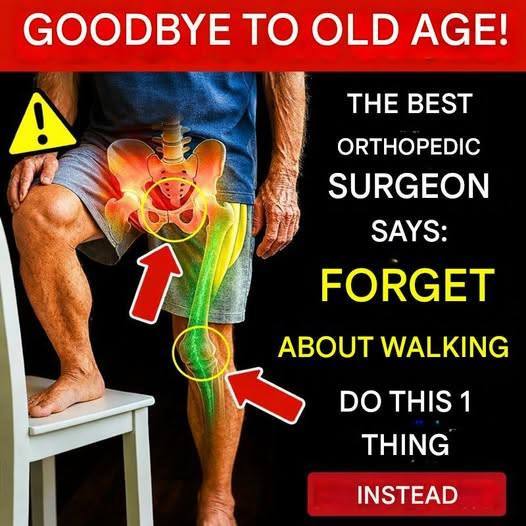
For decades, walking has been promoted as the gold standard of exercise for older adults. It’s simple, low-impact, free, and accessible. But according to many orthopedic surgeons and geriatric specialists, walking alone is no longer enough after age 75. While it remains beneficial, relying on walking as your only form of physical activity may leave critical aspects of your health unprotected.
As we age, the body changes in ways that walking simply cannot fully address. Muscle mass declines, bones become more fragile, balance weakens, and reaction time slows. These changes dramatically increase the risk of falls, fractures, loss of independence, and chronic pain. The good news? There is a smarter, safer, and more effective approach.
Why Walking Alone Falls Short After 75
Walking primarily works the lower body in a repetitive, forward motion. While it supports cardiovascular health and mobility, it does very little to preserve muscle strength, bone density, or balance—the three pillars of healthy aging.
Orthopedic surgeons often see patients who “walk every day” yet still suffer hip fractures, knee instability, spinal compression fractures, or frequent falls. The reason is simple:
-
Walking does not significantly load the bones
-
It does not strengthen the upper body
-
It does not challenge balance or coordination
-
It does not prevent muscle loss (sarcopenia)
After age 75, muscle mass can decline by as much as 1–2% per year, accelerating weakness and frailty. Without intervention, this loss directly impacts independence.
What to Do Instead: The 3-Pillar Movement Plan
Orthopedic specialists recommend a combined movement strategy that goes beyond walking. This approach focuses on strength, balance, and functional movement.
1. Strength Training (The Most Important Change)
If there’s one habit that matters most after 75, it’s strength training. This does not mean heavy weights or gym machines. It means gentle, consistent resistance that tells your muscles and bones to stay strong.
Benefits include:
-
Reduced joint pain
-
Stronger bones (lower fracture risk)
-
Improved posture
-
Easier daily tasks (standing, climbing stairs, carrying groceries)
Simple examples:
-
Chair squats
-
Wall push-ups
-
Resistance band exercises
-
Light dumbbells or water bottles
Just 2–3 sessions per week can significantly improve strength and stability.
2. Balance Training (Fall Prevention Is Critical)
Falls are the leading cause of injury-related hospitalization in adults over 75. Balance training is not optional—it’s essential.
Orthopedic surgeons emphasize that balance must be practiced to be preserved.
Effective balance exercises include:
-
Standing on one foot while holding a chair
-
Heel-to-toe walking
-
Tai Chi
-
Gentle yoga for seniors
These movements train the nervous system, improve coordination, and strengthen stabilizing muscles that walking never engages.
3. Functional Movement (Train for Real Life)
Functional exercises mimic everyday activities, making daily life safer and easier.
Examples:
-
Sit-to-stand movements
-
Reaching and twisting exercises
-
Step-ups on a low platform
-
Carrying light objects safely
This type of training improves confidence, reaction time, and independence.
Should You Stop Walking? Absolutely Not
Walking is still valuable—it supports heart health, digestion, mood, and circulation. The key message from orthopedic experts is not to replace walking, but to stop relying on it alone.
Think of walking as the foundation, not the full structure.
A balanced weekly routine might look like:
-
Walking: 20–30 minutes most days
-
Strength training: 2–3 days per week
-
Balance exercises: daily (5–10 minutes is enough)
Joint-Friendly Tips from Orthopedic Surgeons
To protect aging joints while staying active:
-
Warm up before movement
-
Move slowly and with control
-
Avoid high-impact exercises
-
Use supportive footwear
-
Stop if sharp pain occurs
Consistency matters more than intensity.
The Mental and Emotional Benefits
Beyond physical protection, this expanded approach improves mental health. Strength and balance training boost confidence, reduce fear of falling, and promote independence—key factors in preventing depression and social isolation in older adults.
Many seniors report better sleep, improved mood, and a renewed sense of control after adopting a more complete movement routine.
The Bottom Line
Walking is good—but after age 75, it’s no longer enough on its own. Orthopedic surgeons agree that strength, balance, and functional movement are essential for preventing falls, protecting joints, and maintaining independence.
You don’t need a gym, expensive equipment, or long workouts. What you need is a smarter approach that matches the needs of an aging body.
A few minutes a day, done consistently, can mean the difference between merely getting older—and staying strong, stable, and independent well into your later years.