 Skip to content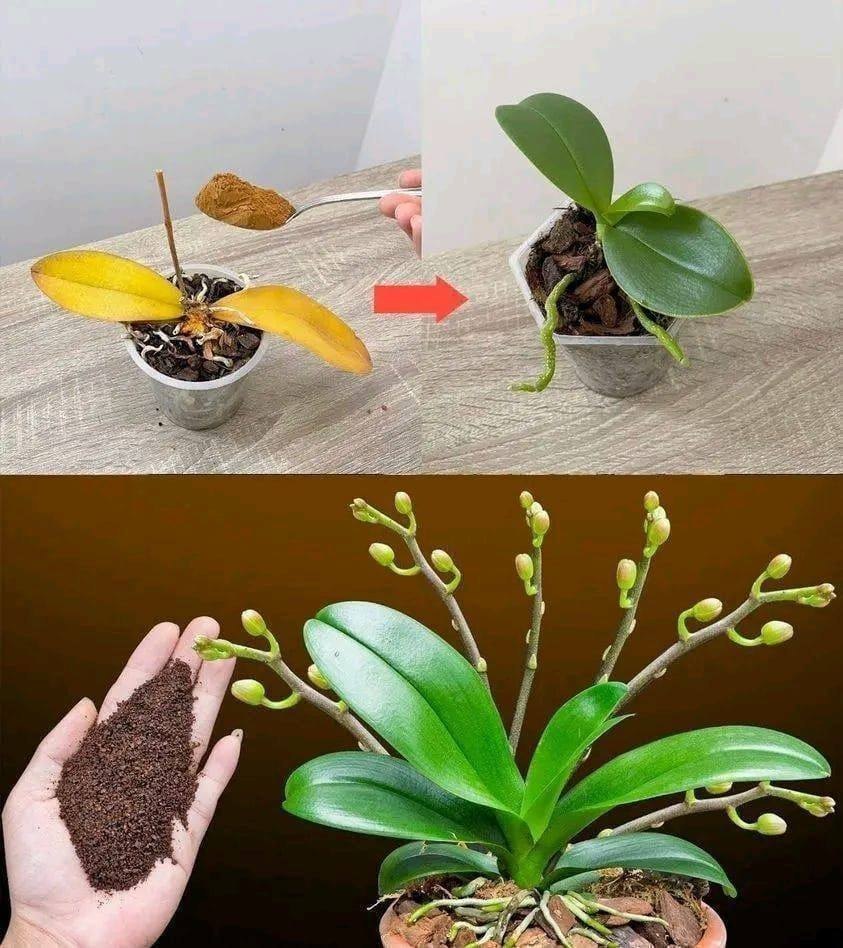
Just One Teaspoon, and Suddenly the Orchid Miraculously Blooms Many Flowers
Orchids have a reputation for being beautiful but stubborn. You buy one in full bloom, enjoy it for a few weeks, and then—nothing. The flowers drop, the leaves sit there looking healthy, and months go by with no sign of new spikes. Many people assume their orchid is “done” or impossible to please. In reality, orchids often just need a small nutritional nudge at the right time. Surprisingly, that nudge can be as simple as one teaspoon of the right natural supplement.
Why Orchids Stop Blooming
Before talking about the teaspoon that makes the difference, it’s important to understand why orchids often refuse to flower. Most common household orchids, especially Phalaenopsis (moth orchids), bloom in response to a balance of light, temperature, and nutrients. They may grow leaves and roots just fine, but flowering requires extra energy—particularly certain minerals.
Many orchid owners water regularly but forget that plain water, especially distilled or rainwater, contains very few nutrients. Over time, the plant survives but lacks the strength to produce flower spikes. This is where a gentle, targeted supplement can work wonders.
The Magic Teaspoon: Epsom Salt
The “miracle” teaspoon many experienced growers swear by is Epsom salt, also known as magnesium sulfate. Magnesium plays a key role in photosynthesis and helps orchids produce stronger leaves, healthier roots, and—most importantly—more abundant blooms.
Magnesium is a central component of chlorophyll. When an orchid has enough of it, the plant can convert light into energy more efficiently. That extra energy often goes straight into flower production.
How to Use It Correctly
Using Epsom salt is simple, but moderation is crucial. Orchids are sensitive plants, and more is not better.
What you need:
-
1 teaspoon of plain Epsom salt (unscented, no additives)
-
1 liter (about 4 cups) of room-temperature water
How to apply:
-
Dissolve the teaspoon of Epsom salt completely in the water.
-
Use this solution to water your orchid as you normally would, letting excess water drain out of the pot.
-
Apply once every 3–4 weeks, not more.
That’s it. No soaking overnight, no daily feeding, no complicated schedules.
What Happens Afterward
Within a few weeks, many orchid owners notice subtle but exciting changes:
-
Leaves become deeper green and slightly firmer
-
Root tips look more active and healthy
-
A new flower spike may begin to emerge from the base of the leaves
When conditions are right, that spike can develop multiple buds, leading to a dramatic burst of blooms. While it may look “miraculous,” it’s really the plant responding to finally getting what it was missing.
When This Works Best
This teaspoon trick is most effective when:
-
Your orchid has healthy leaves and roots but hasn’t bloomed in months
-
The plant receives bright, indirect light
-
Night temperatures are slightly cooler than daytime temperatures
-
You’re not overwatering
Epsom salt won’t rescue a severely damaged or rotting orchid, but it can absolutely push a healthy plant from “surviving” into “thriving.”
Common Mistakes to Avoid
Many people get excited and make these mistakes:
-
Using too often: Monthly is enough. Overuse can cause salt buildup.
-
Mixing with other fertilizers at the same time: Alternate weeks instead.
-
Applying to dry roots: Lightly water first, then apply the solution.
-
Expecting instant flowers: Orchids work on their own schedule. Patience is part of the process.
Extra Tips for Maximum Blooming
To support the effect of that one teaspoon, keep these basics in mind:
-
Use a pot with drainage holes
-
Never let the orchid sit in standing water
-
Provide 10–12 hours of indirect light daily
-
Wipe leaves occasionally to remove dust and improve photosynthesis
Some growers also rotate between Epsom salt water and a diluted orchid fertilizer, giving the plant a balanced diet without overwhelming it.
A Small Change, Big Results
Orchids don’t need expensive products or complicated routines to bloom beautifully. Sometimes, all it takes is understanding what the plant is missing and providing it gently. One teaspoon of Epsom salt, used correctly, can restore balance, boost energy, and encourage your orchid to do what it does best—produce stunning flowers.
If your orchid has been quiet for too long, this simple method may be the little secret that turns green leaves into a cascade of elegant blooms once again.