 Skip to content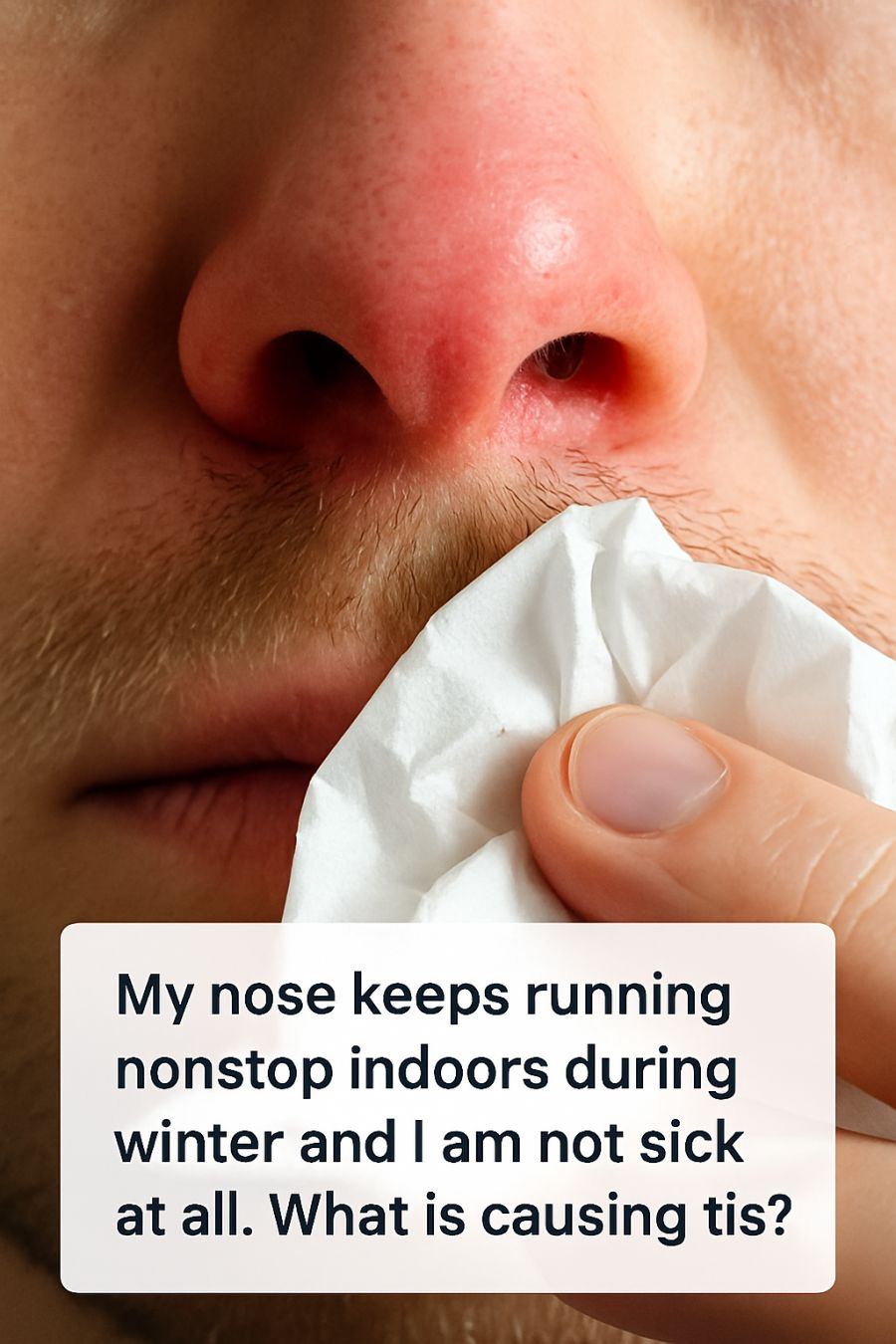
If your nose runs constantly indoors during winter—even when you’re not sick—you’re not imagining it. This is a surprisingly common issue, and it has very little to do with infections. Instead, it’s usually your nose reacting to environmental changes, dry air, and overactive nasal nerves. Let’s break down what’s really happening and why winter makes it worse.
1. Dry Indoor Air Is the Biggest Culprit
During winter, heating systems become our best friends—and our noses’ worst enemies. Indoor heaters drastically reduce humidity, drying out the air you breathe. Your nasal passages are lined with delicate membranes that need moisture to function properly.
When the air is too dry, your nose goes into defense mode. To protect itself, it produces extra mucus to keep the tissues moist. The result? A constantly runny nose, even though you feel perfectly healthy.
This type of nasal response is not an illness—it’s a protective reflex.
2. Nonallergic Rhinitis (Very Common in Winter)
One of the most common causes of a nonstop runny nose indoors is nonallergic rhinitis. Unlike allergies, this condition isn’t triggered by pollen, dust mites, or pet dander. Instead, it’s caused by irritation of the nasal nerves.
Triggers include:
-
Warm indoor air after cold outdoor exposure
-
Dry air from heaters
-
Strong smells (cleaning products, perfumes)
-
Sudden temperature changes
Your nasal nerves become overly sensitive and signal your glands to release mucus—even when there’s no real threat.
Key clue:
👉 No itching, no sneezing fits, no red eyes—just constant dripping.
3. Temperature Changes Confuse Your Nose
Walking from freezing outdoor air into a warm room sends mixed signals to your nasal blood vessels. Cold air causes them to constrict, while warm air makes them expand rapidly.
This rapid change leads to:
-
Increased blood flow
-
Swollen nasal tissues
-
Overproduction of clear, watery mucus
Your nose basically overshoots its adjustment and produces more fluid than necessary.
4. Overactive Nasal Glands (Vasomotor Rhinitis)
In some people, the glands inside the nose are simply overreactive, especially in winter. This condition is often called vasomotor rhinitis.
It’s linked to:
-
Nerve sensitivity rather than infection
-
Cold weather and indoor heating
-
Stress or hormonal changes
The mucus is usually clear and watery, not thick or colored, which is another sign that it’s not a cold or flu.
5. Low Humidity Irritates the Nasal Lining
When humidity drops below 30% (very common indoors in winter), the nasal lining becomes irritated and inflamed. Tiny blood vessels inside your nose may leak fluid as a response.
This irritation can also cause:
-
Post-nasal drip
-
Frequent throat clearing
-
A “wet” nose without congestion
Your body is simply trying to rehydrate the nasal tissues.
6. Dust and Indoor Irritants Increase in Winter
Ironically, winter can increase exposure to irritants even if you’re indoors more often.
Common indoor irritants include:
-
Dust buildup from closed windows
-
Carpet fibers and upholstery
-
Cleaning sprays and air fresheners
-
Smoke from cooking or fireplaces
Even if you’re not allergic, these particles can irritate the nasal lining and trigger mucus production.
7. Cold Air Triggers a Reflex Response
Cold air stimulates special nerve endings in the nose. These nerves activate glands that release mucus to warm and humidify the air before it reaches your lungs.
When you’re indoors in winter, your nose may still be reacting to:
-
Residual cold exposure
-
Chilled nasal tissues
-
Rapid air temperature fluctuations
This reflex can persist long after you’ve warmed up.
8. It’s Not a Cold—Here’s How You Can Tell
A winter runny nose caused by environmental factors usually has these features:
-
Clear, watery discharge
-
No fever
-
No body aches
-
No sore throat
-
No fatigue
If mucus becomes thick, yellow, or green—or you develop pain or fever—that’s when infection may be involved.
9. Why It Happens More as We Age
As we get older, the nerves controlling nasal blood vessels and mucus glands become less precise. This makes the nose more reactive to temperature and humidity changes, which is why many adults notice this issue more over time.
10. When to See a Doctor
Most winter runny noses are harmless, but medical advice is helpful if:
-
Symptoms persist year-round
-
You have nasal bleeding or pain
-
The discharge becomes thick or foul-smelling
-
It interferes with sleep or daily life
A doctor can rule out structural issues or chronic rhinitis.
Final Thoughts
A nonstop runny nose indoors during winter is usually your body’s natural response to dry air, heating systems, and temperature changes—not illness. Your nose is doing its job: protecting your airways, maintaining moisture, and filtering the air you breathe.