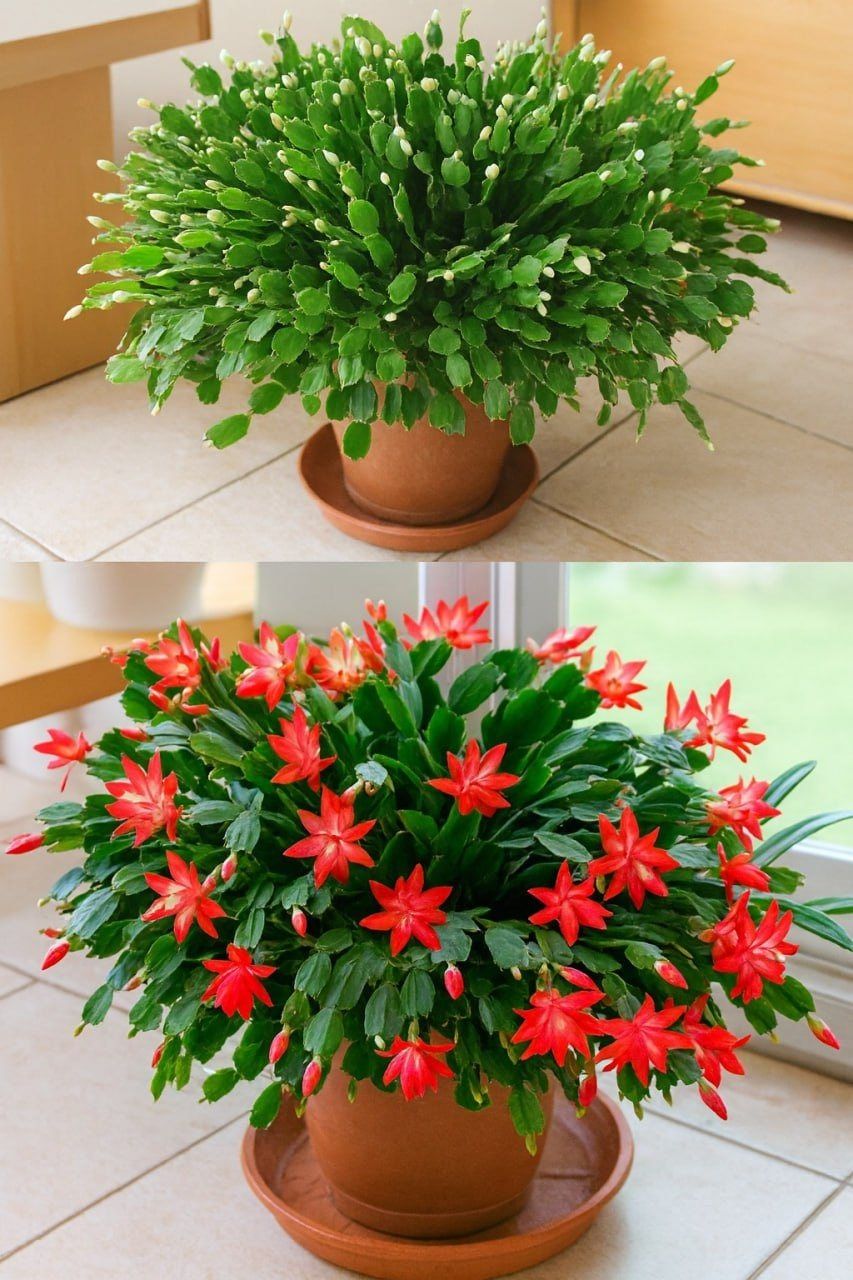
The Christmas cactus (Schlumbergera) is one of the most beloved holiday plants, admired for its cascading stems and vibrant blooms that appear just when most houseplants rest. Yet many owners are disappointed when their plant grows lush and green but refuses to flower. The good news? A Christmas cactus isn’t difficult to bloom—it simply needs the right signals. Once you understand how to “activate” flowering, you can enjoy spectacular blossoms year after year.
Understanding the Christmas Cactus Bloom Cycle
Unlike desert cacti, the Christmas cactus is a tropical epiphyte native to Brazilian rainforests. In nature, it grows in tree crevices where days become shorter and nights cooler as winter approaches. These environmental cues trigger bud formation.
To activate flowering indoors, you must recreate three key conditions:
Shorter daylight hours
Cooler night temperatures
Proper watering and feeding balance
When these elements align, your cactus switches from growth mode to bloom mode.
Step 1: Control Light Exposure (This Is Critical)
Christmas cacti are short-day plants, meaning they form buds when nights are long and uninterrupted.
What to Do:
Provide 12–14 hours of complete darkness every night for 6–8 weeks.
During the day, bright indirect light is ideal.
At night, avoid lamps, TV light, or streetlight exposure.
Easy Method:
Move the plant to a dark room each evening.
Or cover it with a breathable box or cloth from evening until morning.
💡 Consistency matters more than perfection. Missing a night or two won’t ruin everything, but frequent light interruptions will delay blooming.
Step 2: Lower the Temperature Slightly
Temperature works hand-in-hand with darkness to trigger flowering.
Ideal Temperatures:
Night: 55–65°F (13–18°C)
Day: 65–70°F (18–21°C)
Cool nights signal the plant that it’s time to reproduce. If your home is warm year-round, place the cactus near a cool window or in an unheated room at night.
⚠️ Avoid drafts, heaters, and sudden temperature swings—these can cause bud drop.
Step 3: Adjust Watering (Less Is More)
Overwatering is one of the most common reasons Christmas cacti fail to bloom.
Correct Watering Routine:
Allow the top inch of soil to dry out between waterings.
Water thoroughly, then let excess drain away.
Never let the pot sit in standing water.
During the pre-bloom phase, slightly reduced watering helps signal the plant to shift energy from leaf growth to flower production.
Step 4: Feed Strategically
Nutrition plays a supporting role in flowering.
Best Fertilizer:
Use a balanced or low-nitrogen fertilizer (such as 10-10-10 or 5-10-10).
Feed once a month from spring through early fall.
Stop fertilizing 6–8 weeks before expected blooming.
Too much nitrogen encourages leafy growth at the expense of flowers.
Step 5: Don’t Repot Before Blooming
Christmas cacti actually bloom best when slightly root-bound.
Avoid repotting in fall.
Repot only every 2–3 years, ideally in spring.
Use a well-draining soil mix (cactus mix with added perlite or orchid bark).
Disturbing the roots right before blooming season can stop flower formation altogether.
Step 6: Be Patient Once Buds Appear
Once buds form, the most important thing is stability.
Do NOT:
Move the plant frequently
Change light conditions
Overwater
Expose it to heat or cold stress
Any sudden change can cause buds to drop before opening.
🌸 When conditions remain steady, buds will swell and open into long-lasting flowers that can bloom for several weeks.
Common Reasons Christmas Cactus Won’t Bloom
If your plant still refuses to flower, check for these issues:
Too much nighttime light
Warm nights above 70°F (21°C)
Overwatering or soggy soil
Excess nitrogen fertilizer
Stress from repotting or frequent movement
Correcting just one of these problems can often restart the blooming process.
After Bloom Care (For Future Flowers)
Once flowering ends:
Resume normal watering
Begin monthly feeding again
Provide bright indirect light
Prune lightly to encourage branching (more branches = more flowers)
Each healthy segment has the potential to produce buds next season.
Final Thoughts
Activating flowering in a Christmas cactus is less about effort and more about timing and consistency. By mimicking nature—long dark nights, cooler temperatures, moderate watering, and gentle care—you unlock the plant’s natural blooming instinct.
With a little patience and attention, your Christmas cactus will reward you with a breathtaking display of color exactly when you want it most, turning your home into a living holiday celebration year after year. 🌺
