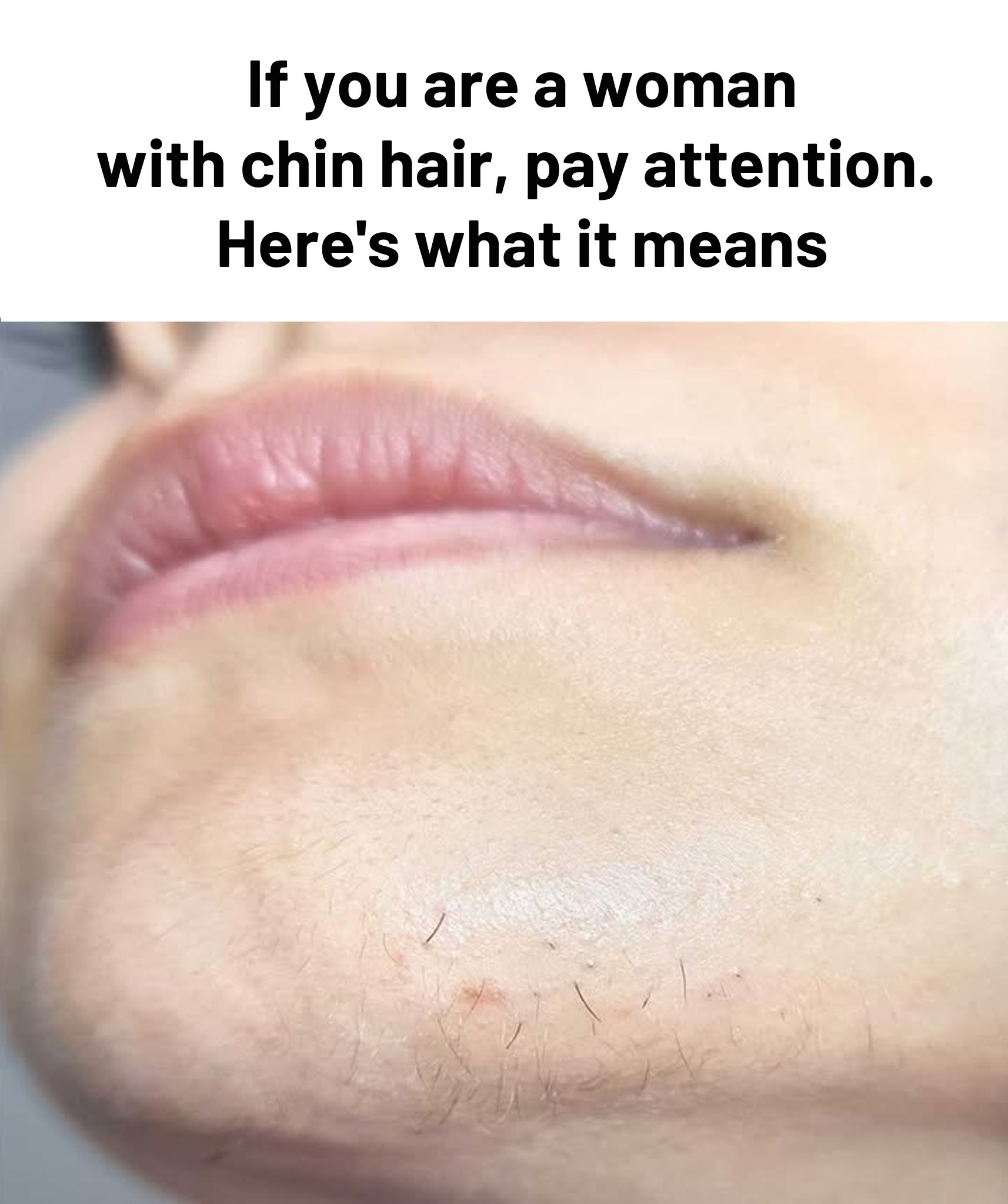
If You Are a Woman With Chin Hair, Pay Attention: Here’s What It Means
Finding chin hair can be surprising, frustrating, or even embarrassing for many women. You may notice a single dark strand appearing out of nowhere, or several coarse hairs that seem to grow back faster every time you remove them. While chin hair is extremely common, it often raises questions like: Is this normal? Does it mean something is wrong with my health?
The truth is, chin hair in women can have many meanings, and most of them are completely harmless. Understanding why it happens can help you feel more confident, informed, and in control.
Chin Hair in Women Is More Common Than You Think
First things first: chin hair in women is normal. Nearly all women have facial hair, including on the chin, upper lip, and jawline. The difference is that some hairs are light and barely visible, while others are darker, thicker, and more noticeable.
As women age, hormonal shifts can cause these hairs to become more prominent. This is why many women start noticing chin hair in their 30s, 40s, or during menopause.
Hormones and Chin Hair Growth
One of the most common reasons women develop chin hair is hormonal imbalance. Women naturally produce small amounts of androgens (male hormones such as testosterone). When these hormone levels increase or become more dominant, facial hair growth may become more noticeable.
Hormonal changes can occur due to:
-
Puberty
-
Pregnancy
-
Menopause
-
Stress
-
Certain medications
Even slight hormonal fluctuations can trigger chin hair growth without indicating a serious medical problem.
Chin Hair and Polycystic Ovary Syndrome (PCOS)
In some cases, excessive chin hair may be linked to polycystic ovary syndrome (PCOS). PCOS is a common hormonal condition that affects many women of reproductive age. It is often associated with:
-
Irregular menstrual cycles
-
Acne
-
Weight gain
-
Thinning scalp hair
-
Increased facial or body hair
However, having chin hair does not automatically mean you have PCOS. Many women with no underlying condition still experience chin hair growth.
Genetics Play a Major Role
If women in your family have chin hair, chances are you might too. Genetics strongly influence facial hair growth, including thickness, color, and growth patterns.
Women of certain ethnic backgrounds may naturally have darker or coarser facial hair. This is not a sign of poor health — it’s simply how your body is designed.
Aging and Chin Hair
As estrogen levels decline with age, especially during perimenopause and menopause, androgen hormones can become more noticeable. This shift often leads to:
-
Chin hair growth
-
Upper lip hair
-
Jawline hair
At the same time, scalp hair may become thinner, which can make facial hair feel even more noticeable.
Stress and Lifestyle Factors
Chronic stress can disrupt hormone balance, which may indirectly contribute to facial hair growth. Poor sleep, lack of physical activity, and unhealthy eating habits can also affect how your body regulates hormones.
While stress alone won’t suddenly cause chin hair, it can worsen existing tendencies.
Should You Be Concerned?
In most cases, chin hair is not a health emergency. However, you may want to consult a healthcare professional if you notice:
-
Sudden and rapid hair growth
-
Chin hair combined with voice deepening
-
Irregular periods
-
Severe acne or unexplained weight gain
These symptoms may warrant further evaluation to rule out hormonal disorders.
Best Ways to Manage Chin Hair
There are many safe and effective ways to manage chin hair, including:
-
Tweezing for individual hairs
-
Threading or waxing for multiple hairs
-
Shaving (it does not make hair grow back thicker)
-
Laser hair removal for long-term reduction
The best method depends on your skin type, hair thickness, and personal preference.
Embracing Your Body With Confidence
Chin hair does not define your beauty, femininity, or health. Many women experience it, even if they don’t talk about it openly. Understanding the reasons behind chin hair growth can remove fear and replace it with confidence.
Your body is constantly changing — and sometimes, a single chin hair is simply a reminder of that.
Final Thought
If you are a woman with chin hair, pay attention — not with worry, but with awareness. Most of the time, it’s a normal part of aging, genetics, or hormonal shifts. When you understand what it means, it becomes just another manageable part of self-care, not something to hide or fear.
