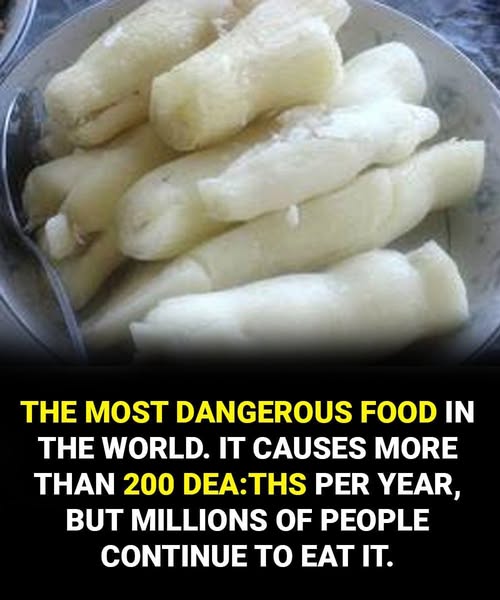
When people hear the phrase “dangerous food,” they usually think of junk food, ultra‑processed snacks, or sugary drinks. But the most dangerous food in the world isn’t fast food, candy, or soda. In fact, it’s a staple that more than 800 million people rely on every day for survival.
That food is cassava.
Despite feeding entire nations, cassava is responsible for hundreds of deaths every year worldwide when prepared incorrectly—and even more cases of long‑term neurological damage. Yet millions continue to eat it daily, often unaware of the risks hiding beneath its starchy surface.
What Is Cassava?
Cassava (also known as yuca or manioc) is a root vegetable grown mainly in Africa, South America, and parts of Asia. It is drought‑resistant, cheap to grow, and extremely calorie‑dense, making it a lifeline for food‑insecure regions.
It can be processed into:
Flour (used for bread and flatbreads)
Tapioca pearls
Gari and fufu
Chips and snacks
On the surface, cassava looks harmless. Underground, it is anything but.
Why Cassava Is So Dangerous
Cassava naturally contains cyanogenic glycosides, chemicals that convert into hydrogen cyanide when the plant is damaged, crushed, or eaten raw.
Hydrogen cyanide is the same fast‑acting poison historically used in:
Industrial chemicals
Pest control
Chemical warfare
A single poorly prepared cassava meal can contain enough cyanide to cause acute poisoning.
Symptoms of Cassava Cyanide Poisoning
Dizziness and headache
Vomiting and stomach pain
Rapid breathing
Loss of consciousness
Cardiac arrest
Death in severe cases
According to global health estimates, hundreds of people die every year from cassava poisoning, particularly during food shortages when people skip proper processing steps.
The Silent Damage: When Cassava Doesn’t Kill
Death isn’t the only danger.
Chronic exposure to low levels of cyanide from cassava has been linked to irreversible neurological disorders, including a condition called konzo—a sudden, permanent paralysis of the legs.
Konzo mainly affects:
Children
Pregnant women
People with poor protein intake
Once it develops, the damage cannot be reversed.
This makes cassava one of the few foods in the world that can both kill quickly or disable for life, depending on exposure.
Why Do People Keep Eating It?
If cassava is so dangerous, why is it still consumed by millions?
1. It’s a Survival Food
In many regions, cassava is the only crop that survives drought, war, or poor soil.
2. Proper Preparation Makes It Safe
When processed correctly—through soaking, fermenting, drying, and thorough cooking—cassava becomes safe to eat.
The danger arises when:
It’s eaten raw or undercooked
Processing is rushed due to hunger
Traditional knowledge is lost
Climate disasters reduce preparation time
3. Lack of Awareness
Many people don’t realize cassava contains natural poison. Others underestimate how dangerous improper preparation can be.
Not All Cassava Is Equally Dangerous
There are two main types:
Sweet cassava (lower cyanide, still unsafe raw)
Bitter cassava (much higher cyanide levels, extremely dangerous if mishandled)
Ironically, bitter cassava is often preferred because it resists pests—but it requires extra‑careful processing.
How Cassava Deaths Still Happen Today
Deaths usually spike during:
Famines
Droughts
Wars or displacement
Sudden food shortages
When people are starving, waiting days to properly soak and ferment cassava may feel impossible. That’s when shortcuts turn deadly.
Entire families have been poisoned after sharing a single improperly prepared meal.
Is Cassava Dangerous for Everyone?
If you live in a developed country and eat:
Tapioca
Cassava flour
Packaged cassava products
You are generally safe, because commercial processing removes toxins under regulated conditions.
The danger lies in:
Home processing without proper knowledge
Eating raw cassava
Using bitter cassava incorrectly
The Takeaway
Cassava is a powerful reminder that “natural” does not always mean safe.
It is:
One of the world’s most important survival foods
One of the only common foods that is toxic by default
Responsible for hundreds of deaths every year
Still eaten daily by millions out of necessity
Handled with knowledge and care, cassava saves lives. Handled carelessly, it can take them.
