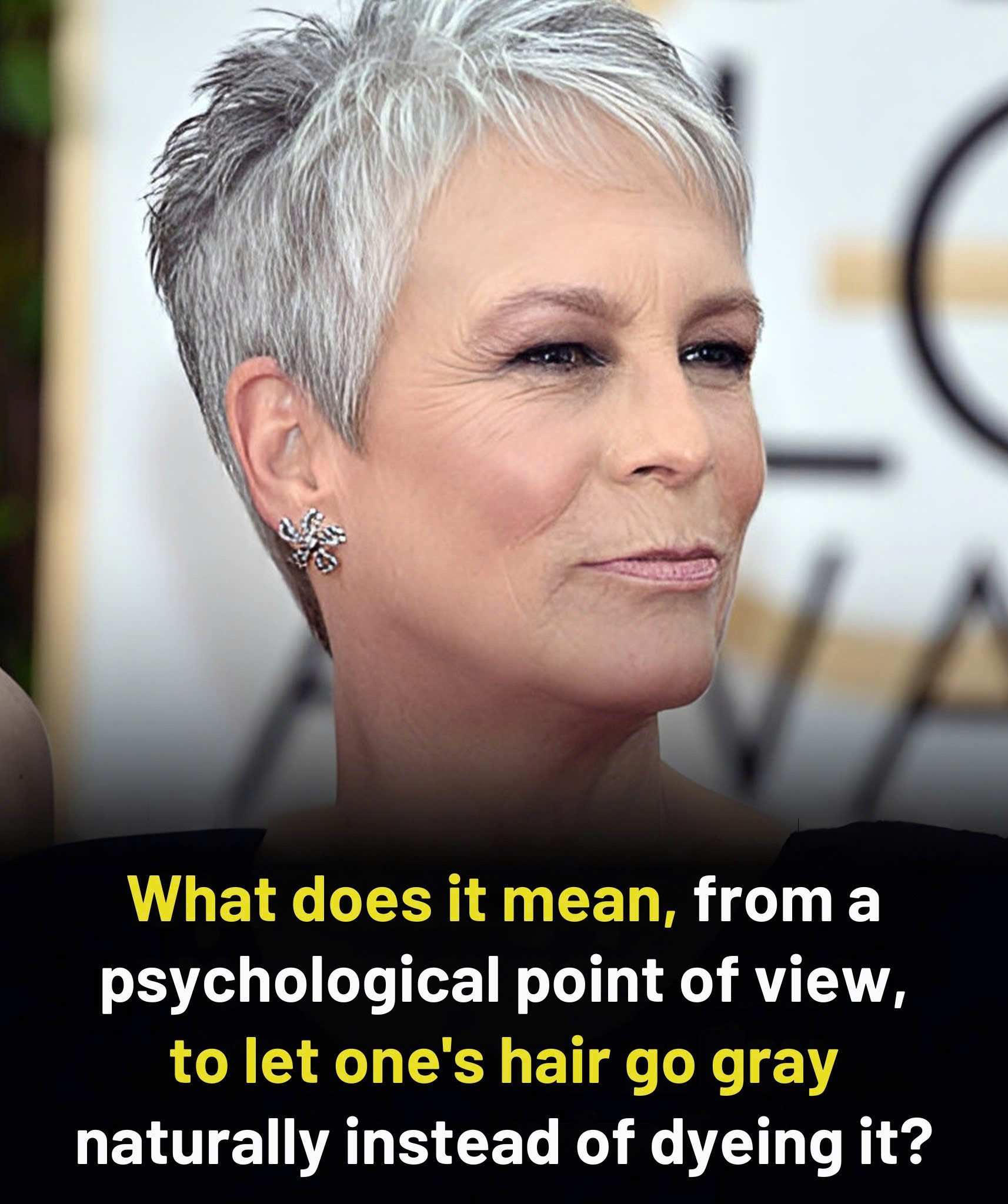
Letting one’s hair go gray naturally is far more than a cosmetic choice. Across cultures and generations, hair has always been deeply tied to identity, youth, power, attractiveness, and social value. Choosing not to dye gray hair—especially in societies that prize youth—often carries a strong psychological significance. It can reflect inner shifts in self-perception, values, confidence, and the relationship a person has with aging itself.
At its core, going gray naturally is often an act of self-acceptance. Psychologically, this signals a move away from external validation and toward internal alignment. Many people dye their hair not because they dislike gray, but because they fear how others will interpret it: “old,” “tired,” “irrelevant,” or “past their prime.” When someone stops covering gray hair, they may be unconsciously saying, “I no longer need to hide who I am or where I am in life.” This acceptance can be deeply liberating, reducing anxiety tied to appearance and social judgment.
Another powerful psychological layer is identity integration. As people age, there is often tension between how they feel inside and how they appear outside. Dyeing gray hair can be a way of clinging to a former version of the self—one associated with youth, vitality, or productivity. Letting hair go gray can signal a reconciliation between past and present identities. Rather than resisting time, the individual integrates life experience, wisdom, and maturity into their self-image. This integration is associated with emotional stability and a stronger sense of self.
Letting gray hair show can also represent psychological independence. Social norms—especially for women—have long dictated that looking young equals being valuable. Breaking away from this norm often requires inner strength. Psychologically, it may reflect autonomy: the ability to make choices based on personal values rather than societal pressure. For many, this decision comes after years of prioritizing others’ expectations—family, workplace standards, or cultural ideals. Going gray can symbolize reclaiming personal agency.
There is also a strong connection between gray hair and authenticity. In psychology, authenticity refers to living in alignment with one’s true self rather than performing a role for acceptance. Natural gray hair can become a visible marker of authenticity—an outward expression of honesty. Some people report feeling more “themselves” once they stop dyeing their hair, as if a subtle but constant act of self-editing has ended. This authenticity often leads to increased self-respect and emotional clarity.
For many individuals, especially later in life, letting hair go gray aligns with existential acceptance. Aging inevitably brings awareness of mortality, impermanence, and time’s passage. Covering gray hair can be a way to deny or delay confronting these realities. Allowing gray hair to appear may reflect a healthier psychological relationship with aging—one that acknowledges life’s limits without despair. This acceptance is associated with greater peace, gratitude, and life satisfaction.
Interestingly, the meaning of going gray naturally can differ by gender due to cultural conditioning. Men are often praised for “distinguished” gray hair, while women are pressured to conceal it. When women choose to go gray, the psychological significance is often even deeper. It may represent resistance to ageism and reclaiming worth beyond physical appearance. This act can be empowering, challenging internalized beliefs about beauty, desirability, and relevance.
Gray hair can also function as a symbol of earned wisdom and experience. Psychologically, embracing gray may indicate pride in one’s life journey—successes, failures, lessons, and survival. Rather than viewing aging as loss, the individual reframes it as accumulation. This reframing supports healthier aging by shifting focus from what is gone to what has been gained.
However, it’s important to note that letting hair go gray naturally does not always stem from confidence or empowerment. In some cases, it may reflect emotional fatigue—a letting go of effort rather than fear. Yet even here, there can be psychological relief. Releasing the constant maintenance of appearance may reduce stress and mental load, especially for individuals experiencing burnout or life transitions.
Ultimately, the true psychological significance of letting one’s hair go gray naturally lies in what it represents internally. It is rarely just about hair. It can symbolize self-acceptance, authenticity, independence, identity integration, and peace with time. In a world that often equates youth with worth, choosing gray can be a quiet but profound declaration: I am enough as I am, at every stage of life.
