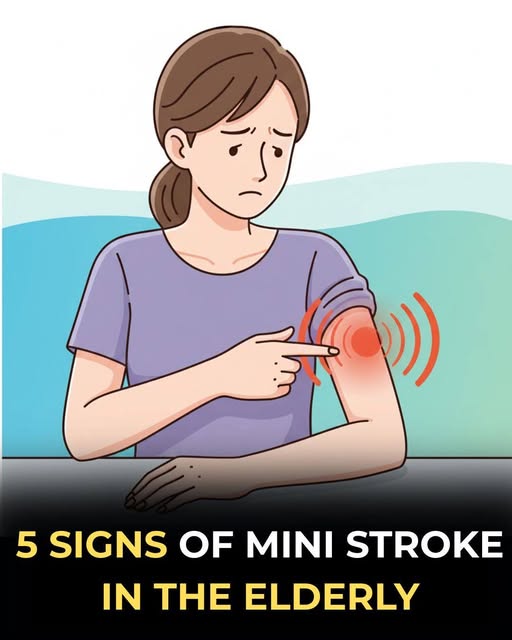
A mini stroke, medically known as a Transient Ischemic Attack (TIA), is a serious warning sign that should never be ignored—especially in older adults. Although the symptoms often disappear within minutes or hours, a mini stroke is a strong predictor of a future, more severe stroke. In fact, many people who experience a major stroke report having a mini stroke days or weeks beforehand.
Because symptoms can be subtle and easily mistaken for normal aging, recognizing the early signs in the elderly is critical. Prompt medical attention can prevent permanent brain damage and even save a life. Below are five key signs of a mini stroke in the elderly, explained in a simple and practical way.
1. Sudden Weakness or Numbness on One Side of the Body
One of the most common signs of a mini stroke is sudden weakness or numbness, especially affecting one side of the body. This may involve the face, arm, leg, or all three.
An elderly person may suddenly drop an object, struggle to lift an arm, or feel tingling in the hand or leg. Sometimes the face may droop slightly on one side, which can be noticed when smiling. Because this weakness often passes quickly, many people dismiss it—but it should never be ignored.
This symptom occurs when blood flow to part of the brain is temporarily blocked, disrupting the brain’s ability to send signals to muscles.
2. Sudden Confusion or Trouble Speaking
Another major warning sign is difficulty speaking or understanding speech. An elderly person may suddenly:
-
Slur their words
-
Speak incoherently
-
Struggle to find simple words
-
Have trouble understanding what others are saying
Family members may notice that the person sounds “off” or confused, even if only for a few minutes. This is not normal aging or simple forgetfulness—it may indicate that the brain’s language center is being affected.
Even brief episodes of speech difficulty should be treated as a medical emergency.
3. Sudden Vision Problems in One or Both Eyes
Mini strokes can also affect vision. An elderly person may experience:
-
Blurred vision
-
Double vision
-
Partial loss of vision
-
Sudden darkness or shadow in one eye
Some describe it as a “curtain” coming down over their vision. These visual changes often come on suddenly and may resolve quickly, which leads many to ignore them.
However, vision problems during a TIA signal reduced blood flow to the areas of the brain responsible for sight—or to the eye itself—and strongly increase the risk of a future stroke.
4. Dizziness, Loss of Balance, or Trouble Walking
Sudden dizziness or balance problems are another important sign, especially in older adults. The person may feel:
-
Lightheaded
-
Unsteady on their feet
-
Unable to walk straight
-
As if the room is spinning
While dizziness can have many causes in the elderly, sudden onset combined with other symptoms should raise concern. A mini stroke can affect the brain areas that control coordination and balance, increasing the risk of falls and injury.
If balance problems appear out of nowhere, especially alongside weakness or vision changes, emergency care is essential.
5. Sudden, Severe Headache With No Known Cause
Although less common, a sudden and severe headache can be a sign of a mini stroke. The headache may feel different from usual headaches and come on rapidly without warning.
Elderly individuals may describe it as the “worst headache of their life” or an intense pressure in the head. While not every stroke involves pain, this symptom should never be overlooked—particularly if it occurs with confusion, vision problems, or weakness.
Why Mini Strokes Are Especially Dangerous for the Elderly
As people age, blood vessels naturally become narrower and less flexible. Conditions such as high blood pressure, diabetes, high cholesterol, heart disease, and atrial fibrillation significantly increase stroke risk in older adults.
A mini stroke is often the body’s final warning. According to medical studies, up to 1 in 3 people who have a TIA will suffer a major stroke, often within the first year—sometimes within days.
What to Do Immediately
If you notice any of these signs—even if they disappear quickly—call emergency services right away. Do not wait or assume the problem has passed.
Use the FAST rule:
-
Face drooping
-
Arm weakness
-
Speech difficulty
-
Time to call emergency services
Early treatment can prevent permanent damage and drastically reduce the risk of a full stroke.
Final Thoughts
Mini strokes are silent warnings that the brain is in danger. In the elderly, symptoms may be subtle, brief, or mistaken for aging—but they are always serious. Knowing these five signs and acting quickly can mean the difference between recovery and lifelong disability.
When it comes to strokes, minutes matter. Never ignore sudden changes—your response could save a life.
