 Skip to content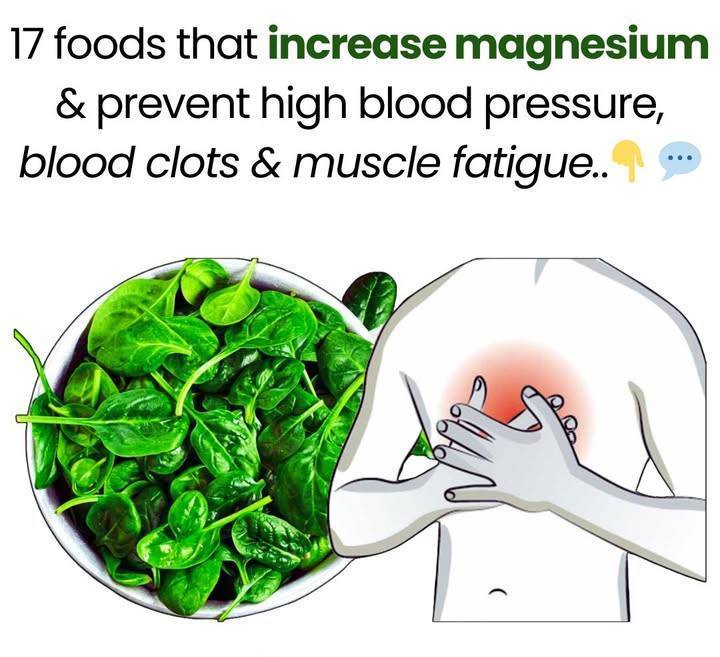
Magnesium is one of the most underrated minerals in the human body, yet it plays a role in more than 300 biochemical reactions. It helps regulate blood pressure, supports healthy blood flow, prevents muscle cramps, and keeps your heart rhythm steady. Unfortunately, many people don’t get enough magnesium from their daily diet, which may contribute to high blood pressure, circulation problems, blood clots, and persistent muscle fatigue.
The good news? You can significantly boost your magnesium levels by choosing the right foods. Below are 17 magnesium-rich foods that support heart health, reduce clotting risk, and help muscles relax and recover naturally.
1. Spinach
Spinach is a magnesium powerhouse. One cooked cup provides nearly 40% of your daily magnesium needs. Magnesium helps relax blood vessels, allowing blood to flow more easily and lowering blood pressure naturally.
2. Pumpkin Seeds
These small seeds pack a serious mineral punch. Just one ounce contains about 150 mg of magnesium. Pumpkin seeds also support healthy circulation and may reduce platelet aggregation, lowering clot risk.
3. Almonds
Almonds are rich in magnesium, healthy fats, and antioxidants. Eating a small handful daily may help regulate blood pressure while preventing muscle fatigue and nighttime leg cramps.
4. Avocados
Avocados contain magnesium along with potassium—an ideal combination for heart health. Together, these minerals help balance fluids, relax blood vessels, and protect against hypertension.
5. Black Beans
Black beans provide magnesium, fiber, and plant protein. Fiber helps control cholesterol, while magnesium supports proper muscle contraction and prevents spasms.
6. Dark Chocolate (70% or Higher)
Dark chocolate is surprisingly rich in magnesium. It also improves blood vessel function and reduces inflammation, which may help prevent abnormal clot formation when eaten in moderation.
7. Bananas
While known for potassium, bananas also provide magnesium. This combination helps prevent muscle cramps, supports nerve signaling, and aids recovery after physical activity.
8. Chia Seeds
Chia seeds are loaded with magnesium, omega-3 fatty acids, and fiber. These nutrients help reduce blood pressure, improve circulation, and support heart rhythm stability.
9. Oats
Whole oats are an excellent breakfast choice for magnesium intake. They help regulate blood sugar levels while supporting relaxed muscles and steady blood flow throughout the day.
10. Cashews
Cashews are rich in magnesium and healthy fats. Regular consumption may help reduce muscle fatigue and improve vascular relaxation, especially in people with magnesium deficiency.
11. Swiss Chard
This leafy green contains magnesium, potassium, and calcium—three minerals essential for healthy blood pressure and muscle function. Swiss chard also supports circulation by improving arterial flexibility.
12. Yogurt
Yogurt provides magnesium along with calcium and probiotics. These nutrients work together to support heart health, muscle recovery, and proper nerve function.
13. Lentils
Lentils are a plant-based magnesium source that also supports blood sugar balance and reduces inflammation—both important factors in preventing blood clots.
14. Salmon
Salmon contains magnesium and omega-3 fatty acids, which help thin the blood naturally, reduce clot risk, and support relaxed blood vessels.
15. Figs
Fresh or dried figs provide magnesium and antioxidants. They support muscle relaxation and may help regulate blood pressure when eaten regularly.
16. Brown Rice
Unlike refined grains, brown rice retains its magnesium content. It supports energy production in muscles and helps prevent fatigue caused by mineral imbalance.
17. Tofu
Tofu is rich in magnesium and protein, making it ideal for muscle repair and recovery. It also supports vascular health by helping blood vessels remain flexible.
Why Magnesium Is Essential for Blood Pressure and Circulation
Magnesium helps regulate calcium movement in blood vessel walls. When magnesium levels are low, blood vessels may tighten, increasing blood pressure and the risk of clot formation. Adequate magnesium intake encourages vessel relaxation, smooth blood flow, and balanced muscle contraction.
Signs You May Be Low in Magnesium
-
Muscle cramps or twitching
-
Fatigue and weakness
-
Irregular heartbeat
-
High blood pressure
-
Poor sleep quality
If these symptoms are frequent, increasing magnesium-rich foods may help.
Simple Tips to Increase Magnesium Naturally
-
Eat leafy greens daily
-
Snack on nuts and seeds instead of processed foods
-
Choose whole grains over refined ones
-
Limit excessive caffeine and sugar, which deplete magnesium
Final Thoughts
Magnesium is a silent protector of your heart, muscles, and circulation. By including these 17 magnesium-rich foods in your diet, you can naturally support healthy blood pressure, reduce the risk of blood clots, and keep muscle fatigue at bay—without relying solely on supplements.