 Skip to content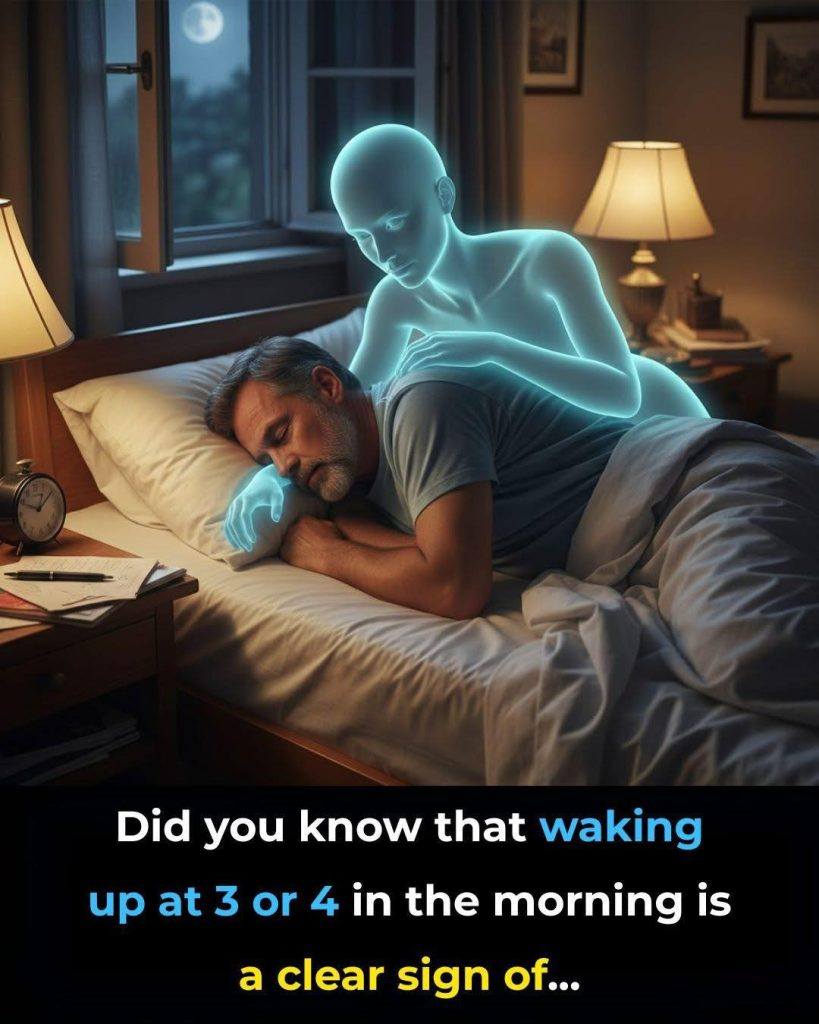
Many people have experienced it: you fall asleep without trouble, only to suddenly wake up at 3:00 or 4:00 in the morning, wide awake and staring at the ceiling. The house is silent. The world feels still. And your mind? Completely alert. It can feel mysterious — even unsettling. Some believe it’s a “clear sign” of something deeper. But what does science actually say?
Waking up at 3 or 4 a.m. is surprisingly common, especially in adults over 35 or 40. In most cases, it is not a supernatural sign or a message from the universe. Instead, it is usually connected to biology, stress, hormones, or lifestyle patterns. Let’s explore what could really be happening inside your body and mind.
First, it’s important to understand how sleep works. Sleep happens in cycles that last about 90 minutes. Throughout the night, you move between light sleep, deep sleep, and REM (rapid eye movement) sleep. In the early part of the night, deep sleep dominates. But in the early morning hours — around 3 or 4 a.m. — REM sleep becomes more frequent, and sleep becomes lighter. This naturally makes it easier to wake up during that time.
One of the most common reasons people wake up at this hour is stress. When you are under emotional pressure — financial worries, family concerns, work problems, health fears — your body produces more cortisol, often called the “stress hormone.” Cortisol levels are naturally lower at night, but in people who are anxious or overwhelmed, cortisol can spike earlier than normal. This can jolt you awake in the early morning hours.
Interestingly, this time of night is also when your brain tends to process emotions. During REM sleep, the brain organizes memories and unresolved feelings. If you have been suppressing worries during the day, your mind may “wake you up” when it tries to process them. That’s why many people who wake at 3 or 4 a.m. notice racing thoughts or sudden anxiety.
Another possible explanation involves blood sugar levels. If you eat a very heavy meal, sugary snacks, or alcohol before bed, your blood sugar may rise and then drop several hours later. That drop can trigger the release of adrenaline and cortisol, waking you suddenly. This is especially common in people with insulin resistance or prediabetes.
Hormonal changes also play a major role. As we age, levels of melatonin — the hormone that regulates sleep — naturally decline. Women going through perimenopause or menopause often experience early-morning awakenings due to fluctuating estrogen and progesterone levels. Men can experience sleep disruptions due to changes in testosterone levels as well.
Sleep apnea is another condition to consider. If you snore loudly or feel tired during the day despite sleeping for many hours, you may be experiencing breathing interruptions during sleep. These pauses can briefly wake you up without you fully realizing it. Many people with mild sleep apnea report consistent awakenings around the same early-morning hour.
There is also a psychological component. If you wake at 3 a.m. once and become anxious about it, your brain may start expecting it. Over time, it can become a habit. The body develops patterns very quickly. Anticipatory anxiety about waking up can actually cause you to wake up again.
Some cultural or spiritual traditions attach special meaning to 3 or 4 a.m., sometimes calling it the “spiritual hour” or “hour of awakening.” While these interpretations can be comforting or meaningful to some, there is no scientific evidence that waking at this time is a mystical sign. In reality, it aligns closely with normal sleep cycle transitions and hormonal shifts.
Mental health also plays a role. Early-morning awakening is a classic symptom of depression. Unlike insomnia at the beginning of the night, depression-related sleep disturbance often causes people to wake earlier than they want and struggle to fall back asleep. If this is accompanied by low mood, lack of interest in activities, fatigue, or feelings of hopelessness, it may be worth speaking to a healthcare professional.
So what can you do if this keeps happening?
First, avoid looking at the clock. Clock-watching increases anxiety and reinforces the pattern. If you wake up, keep the lights low and avoid checking your phone. Blue light suppresses melatonin and makes it harder to fall back asleep.
Second, practice calming techniques. Slow breathing, gentle stretching, or progressive muscle relaxation can signal safety to your nervous system. Even simply lying quietly and resting is beneficial, even if you don’t fall back asleep immediately.
Third, examine your evening habits. Limit caffeine after early afternoon. Avoid alcohol close to bedtime. Try eating a balanced dinner with protein and healthy fats to stabilize blood sugar. Create a consistent sleep schedule, even on weekends.
Fourth, manage stress during the day. Journaling before bed can help release mental tension. Light exercise, sunlight exposure in the morning, and meaningful social interaction all regulate your circadian rhythm.
If early waking continues for several weeks and affects your daily functioning, consider speaking with a doctor. They may evaluate for sleep disorders, anxiety, depression, thyroid issues, or blood sugar imbalances.
In the end, waking up at 3 or 4 in the morning is not a mysterious omen. It is usually a reflection of your body’s natural rhythms combined with stress, hormones, or lifestyle factors. Instead of fearing it, treat it as information — a gentle signal that something in your body or mind may need attention.
Your body is always communicating. The key is learning to listen calmly, not react with fear.