 Skip to content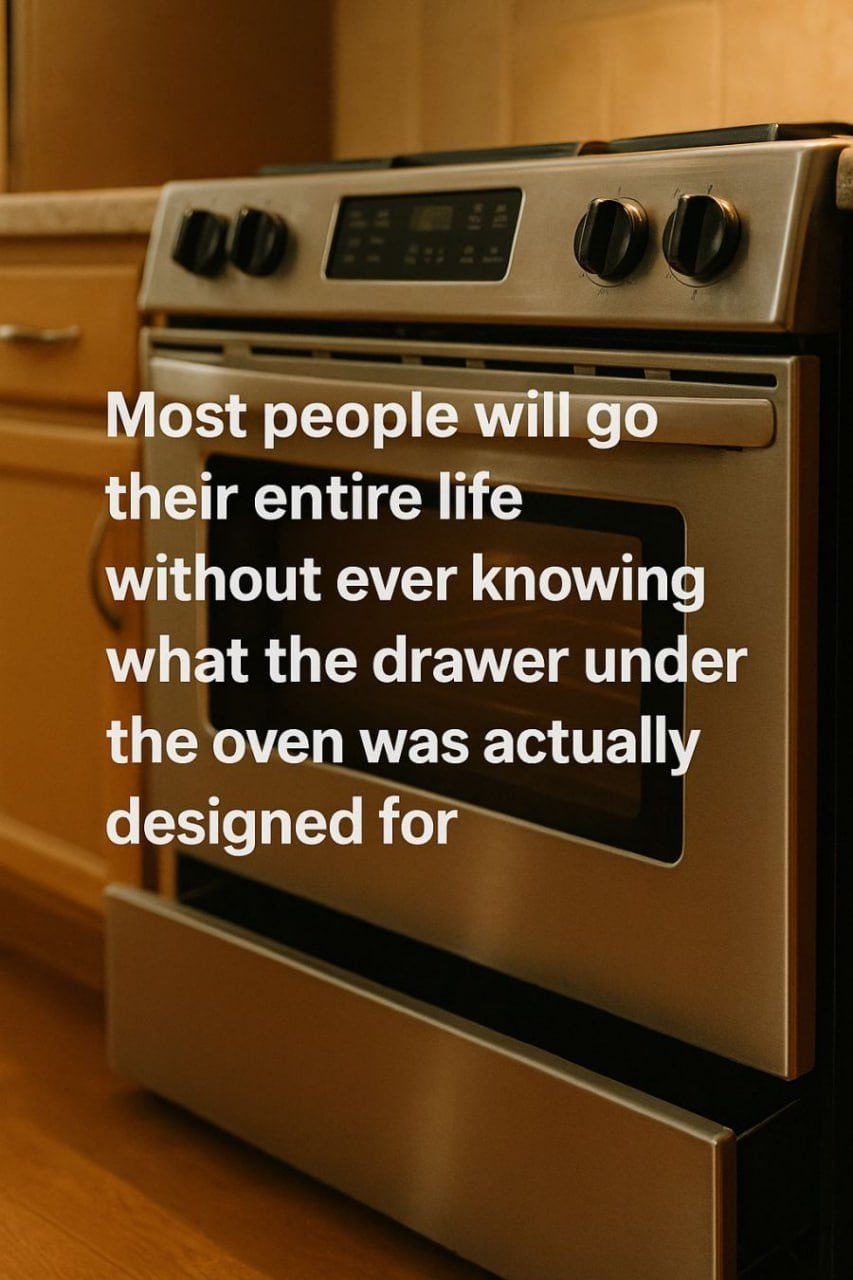
If you’ve ever pulled open the drawer under your oven, you might have paused for a moment, wondering: what is this actually for? For most people, this is a kitchen enigma, a seemingly purposeless space at the bottom of an appliance they use every day. Some store baking sheets there, others toss old pots or even snacks, while a few leave it closed, never quite sure what belongs inside. Yet, despite its common presence, the true purpose of the oven drawer is something that has eluded the notice of millions.
A Common Misconception
Many assume the drawer is simply extra storage, and in some ways, that isn’t entirely wrong. Manufacturers have long marketed it as a convenient place to keep pans, trays, or casserole dishes close at hand. After all, it sits perfectly near the oven, making it tempting to store the tools of your baking trade right below where you’ll need them. But this interpretation only scratches the surface.
In reality, the function of that drawer depends largely on the type of oven you own. Older and more traditional ovens, for example, often included what’s called a “warming drawer” — a feature that was originally intended to keep food warm until it was ready to be served. On modern ovens, however, the drawer often serves a different, sometimes purely mechanical purpose, which can lead to a lot of confusion.
The Warming Drawer: A Forgotten Feature
The original design of many oven drawers was simple yet clever: it was a warming drawer. These drawers are meant to maintain a low, consistent heat, usually around 150–200°F (65–93°C). The idea was to keep your roast hot, your bread rolls soft, or your cooked vegetables at serving temperature while the rest of the meal was finishing on the stove or table.
Unlike a microwave, the drawer wouldn’t cook your food further; it would just hold it at a safe, warm temperature. This was especially handy in households where timing meals perfectly was a challenge — the warming drawer allowed you to prepare dishes ahead of time and serve everything piping hot, no matter when each component finished cooking.
However, not all drawers are functional warming drawers. Many modern ovens feature a drawer that doesn’t heat at all. In these cases, the space exists mainly to cover the oven mechanics, such as insulation, wiring, or heating elements, and sometimes to catch crumbs and debris from the oven above. If you attempt to use these for warming food, you may find that nothing heats up, or worse, you might risk fire hazards or damaging the appliance.
Storage or Safety Feature?
For ovens where the drawer doesn’t heat, people often repurpose it as a storage area. This is how it became commonly seen as a place for pots, pans, muffin tins, or even plastic containers — even though storing flammable items there can be risky if the oven does heat up unexpectedly. In fact, most appliance manuals explicitly caution against placing anything combustible in the drawer. Yet, despite warnings, this practical use became part of household tradition.
Interestingly, in some designs, the drawer is actually there for ventilation. The space allows hot air to circulate, helping the oven maintain its temperature and preventing the bottom of the appliance from overheating. Essentially, the drawer is part of the oven’s “breathing system,” a hidden component in the engineering that ensures safety and efficiency. So, while it may appear to be a simple storage compartment, its presence may be critical to your oven’s performance.
How to Use It Correctly
So how can you make use of the oven drawer safely and effectively? First, check your oven’s manual. If it’s a true warming drawer, it likely has temperature settings and clear guidance on what can be stored inside while heating. These drawers are perfect for:
-
Keeping bread rolls and pastries warm without drying them out.
-
Holding cooked meats while finishing other dishes.
-
Softening butter or chocolate gently without melting it too fast.
If your drawer doesn’t heat, it’s safest to stick to cold storage of oven-safe items only, such as baking sheets or trays. Avoid anything flammable or plastic, as these could melt or catch fire if residual heat from the oven seeps downward.
A Kitchen Quirk with Hidden Genius
The drawer under the oven is a perfect example of everyday design that goes unnoticed until curiosity strikes. It’s one of those features most people pass by every day without ever asking why it exists. Some may never know its true purpose until moving into a new home, receiving an appliance manual, or stumbling upon a discussion online.
Whether a warming drawer, a storage compartment, or part of the oven’s ventilation system, this small feature demonstrates the ingenuity hidden in our kitchens. It reminds us that even the most mundane items in our homes have a story, a history, or an engineering rationale behind them. The next time you slide open that drawer, take a moment to consider its design — and maybe, if you’re lucky, put it to proper use, keeping your bread warm, your pies perfect, or simply marveling at the clever thought that went into a detail most people overlook.
Conclusion
The drawer under the oven is far more than just a forgotten compartment. For some, it’s a warming haven for freshly baked goods; for others, it’s a storage solution; and for a few, it’s a vital part of the oven’s structure. Its presence in kitchens around the world is a subtle testament to design thinking, combining convenience, safety, and versatility. So, the next time you reach for that drawer, remember: there’s more to it than meets the eye. You may finally uncover the secret that millions have overlooked their entire lives.