 Skip to content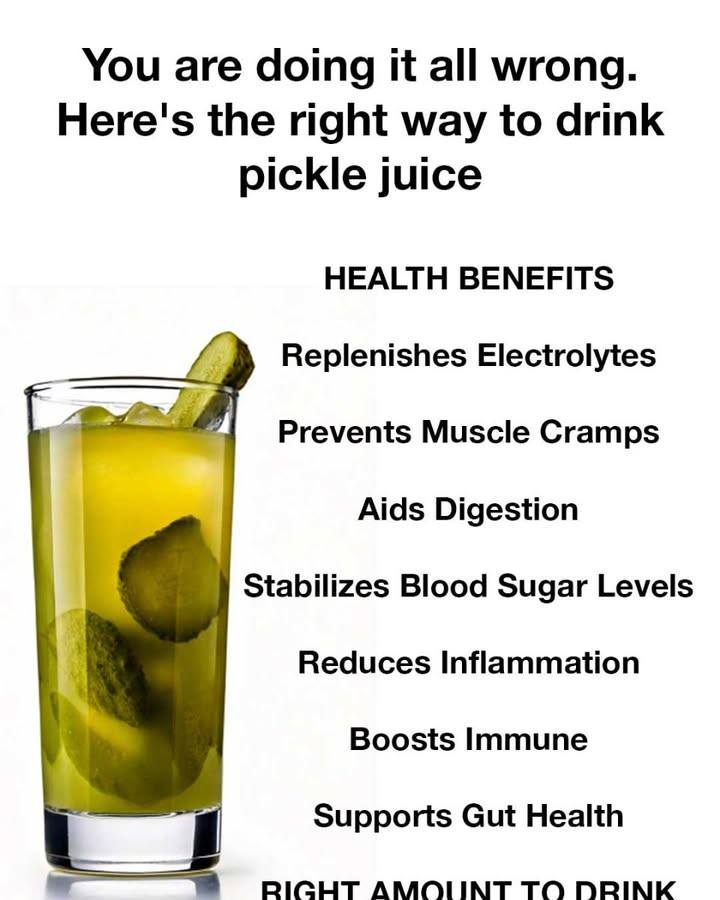
Pickle juice has quietly gone from a quirky leftover in the fridge to a trendy wellness drink praised by athletes, home remedies enthusiasts, and even chefs. Some people swear by it for muscle cramps, digestion, hydration, or simply for its bold, tangy flavor. But here’s the truth most people don’t realize: the way you’re drinking pickle juice may be canceling out its benefits—or even causing problems.
If you’ve ever chugged it straight from the jar, taken huge gulps, or treated it like water, you’re probably doing it wrong. Let’s break down the right way to drink pickle juice so you can enjoy its potential benefits safely and effectively.
First, What Exactly Is Pickle Juice?
Pickle juice is the liquid left behind after cucumbers (or other vegetables) are pickled. Traditional pickle juice contains water, vinegar, salt, and sometimes garlic, dill, mustard seeds, or spices. This combination gives pickle juice its sharp taste—and also its unique nutritional profile.
It’s rich in electrolytes (especially sodium) and acetic acid from vinegar, which is why it has gained attention in health and fitness circles.
Common Mistakes People Make with Pickle Juice
Before learning the right way, let’s look at what most people do wrong:
-
Drinking too much at once
-
Chugging it on an empty stomach
-
Using sugary, artificially flavored pickle juice
-
Drinking it daily without moderation
-
Ignoring sodium content
Pickle juice is powerful. Treating it like a casual beverage is a mistake.
The Right Way to Drink Pickle Juice
1. Drink Small Amounts—Not a Full Glass
This is the most important rule. Pickle juice is not meant to be consumed in large quantities. The ideal amount is:
-
1 to 2 tablespoons at a time
-
No more than 2–3 times per day, and not every day
This small dose is enough to deliver electrolytes and vinegar benefits without overwhelming your system with salt.
2. Sip It Slowly—Never Chug
Chugging pickle juice can irritate your stomach and spike sodium levels too quickly. Instead:
-
Take small sips
-
Let it sit in your mouth briefly
-
Swallow slowly
Many people report better results—especially for cramps—when they sip rather than gulp.
3. Use It at the Right Time
Timing matters more than you think.
Best times to drink pickle juice:
-
After intense sweating or exercise
-
During muscle cramping
-
After a heavy or greasy meal
-
When feeling mildly dehydrated (not severely)
Worst times:
-
First thing in the morning on an empty stomach
-
Right before bed
-
When already bloated or retaining water
4. Dilute It If You’re Sensitive
If pickle juice feels too strong or causes heartburn, dilution is your best friend.
Try this:
-
1 tablespoon pickle juice
-
½ to 1 cup water
This reduces acidity while still delivering electrolytes and flavor.
Why Some People Feel Better After Drinking Pickle Juice
When used correctly, pickle juice may support the body in several ways:
-
Electrolyte replenishment: Sodium helps with nerve signaling and muscle contraction.
-
Cramp relief: Some studies suggest vinegar triggers nerve responses that help stop muscle spasms.
-
Digestion support: Vinegar can stimulate digestive enzymes.
-
Appetite control: The strong flavor may reduce cravings for sugary snacks.
However, these effects come from small, controlled amounts, not excess.
Choose the Right Kind of Pickle Juice
Not all pickle juice is created equal.
Best choice:
-
Naturally fermented pickles
-
Simple ingredients: water, salt, vinegar, spices
-
No artificial colors or preservatives
Avoid:
-
Sweet pickles
-
Pickle juice with added sugar
-
Neon-colored commercial “pickle drinks”
Sugar-heavy pickle juice defeats the purpose and may spike blood sugar.
Who Should Be Careful or Avoid It
Pickle juice is not for everyone. You should limit or avoid it if you:
-
Have high blood pressure
-
Have kidney problems
-
Are on a low-sodium diet
-
Experience frequent acid reflux
-
Retain water easily
If you fall into these categories, occasional diluted sips may be safer—but moderation is essential.
A Smart Way to Add Pickle Juice to Your Routine
Instead of drinking it straight, consider using pickle juice as:
-
A splash in salad dressings
-
A recovery shot after workouts
-
A flavor booster in soups or marinades
-
A quick cramp-relief sip during exercise
This approach keeps intake low while maximizing usefulness.
Final Thoughts
Pickle juice isn’t magic—but when used correctly, it can be surprisingly helpful. The biggest mistake people make is thinking more is better. In reality, pickle juice works best as a tool, not a beverage.
Small sips. Right timing. Quality ingredients. Moderation.
That’s the right way to drink pickle juice—and once you do it properly, you may finally understand why so many people swear by it.