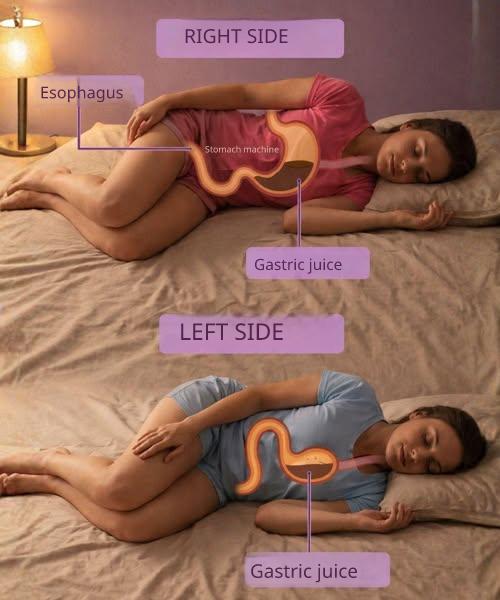
Sleeping position seems harmless—we all just curl up however feels comfortable and drift off. But the position you choose night after night can quietly affect digestion, breathing, heart health, spine alignment, and even how rested you feel in the morning. Right-side sleeping is very common, especially for people who snore or struggle to get comfortable on their backs. While it has some benefits, there are also important cautions you should know before making it your default position.
This isn’t about panic or fear. It’s about awareness—because small nightly habits can have long-term effects on your body.
1. Acid Reflux Can Get Worse
One of the biggest concerns with sleeping on your right side is acid reflux. Your stomach sits slightly to the left side of your body. When you lie on your right side, gravity makes it easier for stomach acid to flow upward into the esophagus.
This can lead to:
-
Heartburn during the night
-
Burning in the chest or throat
-
Sour taste in the mouth
-
Poor sleep quality
Studies have consistently shown that left-side sleeping reduces acid exposure, while right-side sleeping increases it. If you wake up with chest discomfort or throat irritation, your sleeping position may be part of the problem.
Caution: If you have GERD, frequent heartburn, or nighttime reflux, right-side sleeping may be making it worse.
2. Extra Pressure on the Heart
Although the heart sits slightly left of center, sleeping on your right side can change how gravity affects blood flow and circulation. For some people—especially those with existing heart conditions—this position may increase pressure on the heart and lungs.
Some individuals report:
-
A sensation of heaviness in the chest
-
Increased awareness of heartbeat
-
Mild discomfort or palpitations
This doesn’t mean right-side sleeping is dangerous for everyone. But if you already have heart issues or notice discomfort when lying on your right side, it’s worth paying attention.
Caution: If you feel chest tightness or irregular heartbeat when sleeping on your right side, consult a healthcare professional.
3. Spine and Shoulder Strain
Right-side sleeping can also affect posture and joint health, especially if your pillow and mattress aren’t supportive.
Common issues include:
-
Right shoulder compression
-
Neck stiffness
-
Lower back misalignment
-
Tingling or numbness in the arm
Over time, constant pressure on one shoulder can irritate joints and nerves. If your head is tilted too high or too low, the neck bends unnaturally for hours, leading to chronic pain.
Caution: Waking up with shoulder pain or a stiff neck is a sign your alignment needs correction—or your sleeping side needs to change.
4. Digestive Slowdown
Your digestive system follows gravity more than you think. Lying on your right side may slow the movement of food through the stomach and intestines for some people, leading to:
-
Bloating
-
Gas
-
Feeling “heavy” in the morning
In contrast, left-side sleeping supports smoother digestion by allowing waste to move more easily through the colon.
Caution: If you feel bloated or uncomfortable after sleeping, your position could be contributing.
5. Facial Aging and Skin Pressure
This one surprises many people. Sleeping on the same side every night—especially the right—can cause:
-
Sleep lines and wrinkles
-
Puffiness on one side of the face
-
Uneven facial aging
Constant pressure against a pillow reduces blood flow and stretches the skin. Over years, this can contribute to premature wrinkles, particularly around the eyes and mouth.
Caution: Beauty sleep is real—and your sleeping side plays a role.
6. Pregnancy Considerations
For pregnant women, especially in later stages, right-side sleeping may reduce optimal blood flow to the uterus and fetus. Many doctors recommend left-side sleeping during pregnancy because it improves circulation and reduces pressure on major blood vessels.
Caution: Pregnant women should limit right-side sleeping, particularly in the third trimester, unless advised otherwise by a doctor.
7. When Right-Side Sleeping May Be Okay
To be fair, right-side sleeping isn’t all bad. It can:
-
Reduce snoring compared to back sleeping
-
Help some people breathe easier
-
Feel more comfortable for certain body types
The key is balance and support.
How to Sleep More Safely If You Prefer the Right Side
If you’re not ready to change sides completely, here’s how to reduce the risks:
-
Use a firm, supportive pillow that keeps your neck aligned
-
Place a pillow between your knees to support the spine
-
Avoid heavy meals 2–3 hours before bed
-
Elevate your upper body slightly if you have reflux
-
Alternate sides occasionally to reduce pressure
Final Thoughts
Sleeping on your right side isn’t automatically harmful—but it’s not harmless either. If you struggle with acid reflux, chest discomfort, digestive issues, or chronic shoulder pain, this position could be silently contributing.
Your body often sends small warning signals before bigger problems develop. Listening to those signals—and adjusting something as simple as your sleeping position—can make a real difference in how you feel every single day.
