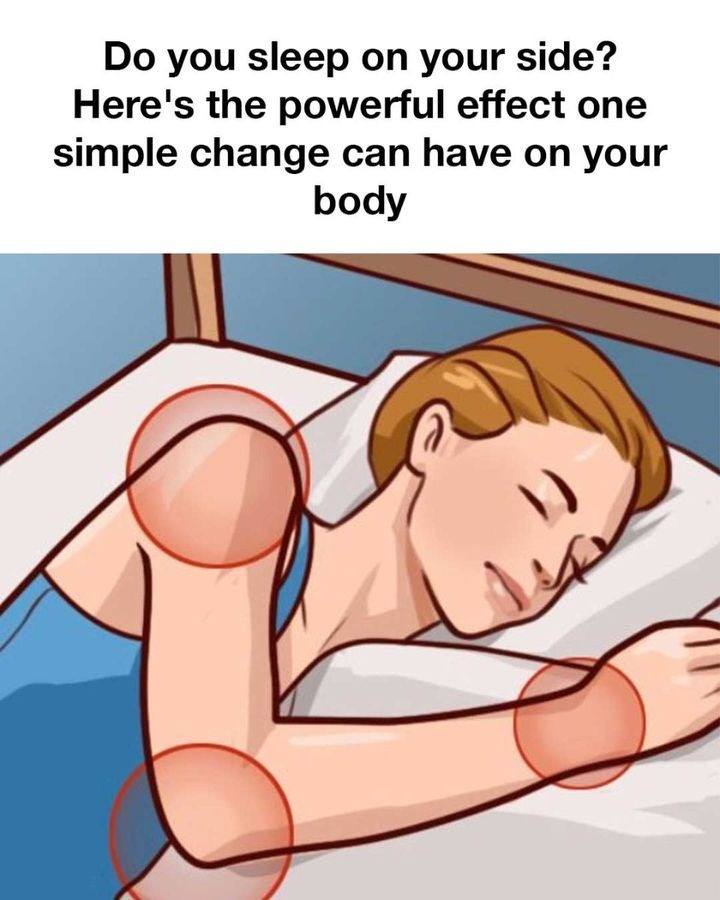
Do You Sleep on Your Side? Here’s the Powerful Effect One Simple Change Can Have on Your Body
Sleep is something we all do every night, yet few of us think about how we sleep. We focus on getting enough hours, buying a better mattress, or scrolling less before bed—but one of the most powerful sleep upgrades doesn’t cost a single penny. It’s simply changing your sleep position. If you sleep on your side (or are thinking about it), this small adjustment can have surprisingly big effects on your body, from digestion and breathing to brain health and pain relief.
Let’s explore why side sleeping is often called the healthiest sleep position—and how one simple change could transform the way you feel every morning.
Why Sleep Position Matters More Than You Think
Your body spends nearly one-third of its life asleep. During these hours, vital processes take place: tissues repair, hormones balance, the brain clears waste, and muscles relax. Your sleep position directly affects how efficiently these processes occur.
Sleeping flat on your back or curled on your stomach can place stress on your spine, restrict breathing, and interfere with digestion. Side sleeping, on the other hand, aligns your body in a way that supports multiple systems at once.
1. Better Breathing and Less Snoring
One of the most immediate benefits of side sleeping is improved airflow. When you sleep on your back, gravity pulls the tongue and soft tissues backward, partially blocking the airway. This is a major reason why snoring and sleep apnea are more common in back sleepers.
Side sleeping keeps the airway more open, allowing oxygen to flow freely. Many people notice reduced snoring within days of switching to their side. For those with mild sleep apnea, side sleeping can significantly lessen symptoms and improve sleep quality—for both the sleeper and their partner.
2. Improved Digestion and Reduced Acid Reflux
If you’ve ever gone to bed after dinner and woken up with heartburn, your sleep position may be partly to blame. Side sleeping—especially on the left side—is known to support healthier digestion.
The stomach naturally sits on the left side of the body. When you sleep on your left side, gravity helps keep stomach acid where it belongs, reducing the chance of it flowing back into the esophagus. This can ease symptoms of acid reflux, bloating, and indigestion.
Many people who struggle with nighttime heartburn report noticeable relief after just a few nights of left-side sleeping.
3. Spinal Alignment and Less Back Pain
Side sleeping can be a game-changer for people with back or neck pain—if done correctly. When you sleep on your side with proper support, your spine stays in a more natural, neutral position.
Using a pillow between your knees helps prevent your upper leg from pulling your spine out of alignment. A supportive pillow under your head keeps your neck straight rather than tilted. This reduces pressure on the lower back, hips, and shoulders.
Over time, better alignment can mean fewer aches, less morning stiffness, and improved mobility throughout the day.
4. Brain Health and Better Waste Removal
One of the most fascinating discoveries in recent years is how sleep position affects the brain’s ability to clean itself. During deep sleep, the brain flushes out waste products through a system known as the glymphatic system.
Research suggests that side sleeping may be the most efficient position for this process. By improving waste removal, side sleeping may support long-term brain health and potentially lower the risk of neurodegenerative conditions associated with toxin buildup.
While sleep alone isn’t a cure-all, this is a powerful reminder that small habits can support big systems.
5. Reduced Pressure on the Heart
Side sleeping can also be gentler on the heart. Sleeping flat on your back may increase pressure on major blood vessels, especially in people with circulation issues.
Left-side sleeping, in particular, may improve blood flow and reduce the workload on the heart. This is one reason doctors often recommend side sleeping during pregnancy—it helps optimize circulation for both mother and baby.
6. Relief for Pregnant Women
For expectant mothers, side sleeping isn’t just helpful—it’s often essential. As pregnancy progresses, sleeping on the back can compress major blood vessels, reducing blood flow and causing dizziness or discomfort.
Sleeping on the left side improves circulation, supports kidney function, and helps reduce swelling in the legs and feet. It’s widely considered the safest and most comfortable position during pregnancy.
7. How to Transition to Side Sleeping (If You’re Not Used to It)
If you’re a lifelong back or stomach sleeper, switching to your side may feel awkward at first. The good news? Your body adapts quickly with a few simple adjustments:
- Use a firm pillow that supports your neck without pushing your head too high
- Place a pillow between your knees to keep your hips aligned
- Hug a body pillow to prevent rolling onto your stomach
- Support your back with a rolled towel or pillow if you tend to roll onto your back during sleep
Consistency is key. After a week or two, side sleeping often starts to feel natural—and deeply comfortable.
The Takeaway: One Small Change, Big Results
Side sleeping may seem like a minor detail, but its effects ripple through your entire body. From better breathing and digestion to spinal alignment and brain health, this one simple change can quietly improve your nights—and your days.
You don’t need expensive gadgets or complicated routines. Just a supportive pillow, a mindful position, and the willingness to try something new.
Tonight, when you lie down, consider turning gently onto your side. Your body just might thank you in the morning.
