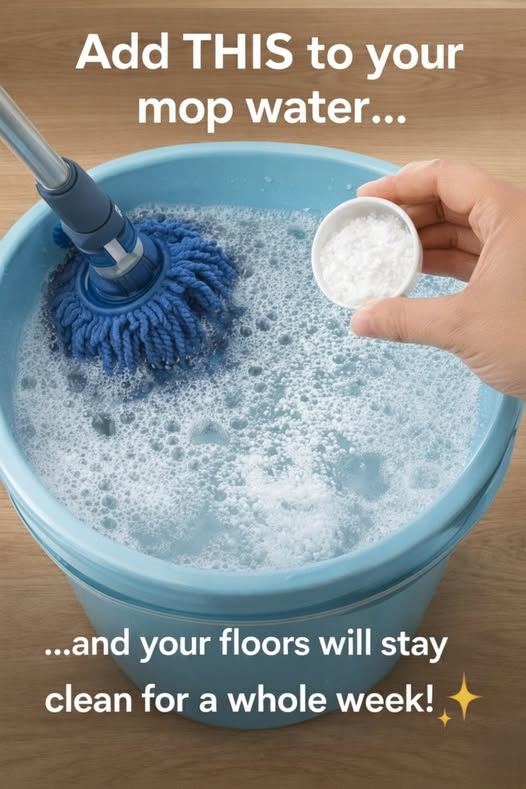
I Didn’t Believe This Floor Trick Until I Tried It… Now I’ll Never Go Back
I’ll be honest—I’ve seen dozens of “miracle cleaning hacks” online, and most of them fall into two categories: wildly exaggerated or way too complicated to be practical. So when I first heard about this floor-cleaning trick, I rolled my eyes. No fancy machine, no expensive cleaner, no hours of scrubbing? Sure.
But after one stubborn afternoon battling dull tiles and sticky patches that refused to disappear, curiosity got the better of me. I tried it. And to my surprise, it worked so well that I haven’t cleaned my floors the same way since.
The Problem With Most Floor Cleaning Methods
Traditional floor cleaning usually follows one of two paths. Either you use harsh chemical cleaners that leave behind residue and strong smells, or you rely on plain water that barely lifts dirt and grease. Many store-bought products promise “shine” but actually coat your floors with a thin film that attracts dust faster the next day.
Over time, floors start to look cloudy, feel sticky underfoot, and lose their original color. You mop more often, use more product, and still don’t get that clean, fresh finish you’re after.
That’s exactly where I was—cleaning often, yet never fully satisfied.
The Simple Trick I Didn’t Expect to Work
This trick is shockingly simple and uses items most people already have at home. No gimmicks, no expensive tools.
What you need:
- Warm water
- White vinegar
- A few drops of dish soap
- A microfiber mop or cloth
That’s it.
The method:
- Fill a bucket with warm (not boiling) water.
- Add about ½ cup of white vinegar.
- Add 3–4 drops of dish soap—no more.
- Dip your mop, wring it out well, and clean as usual.
The key is balance. Too much soap leaves residue, and too much vinegar isn’t necessary. This simple combination cuts grease, lifts grime, and disinfects naturally.
Why This Works So Well
At first glance, it sounds almost too basic. But there’s real logic behind it.
Vinegar breaks down mineral deposits, grease, and bacteria without leaving a sticky film. Dish soap acts as a gentle surfactant—it grabs onto dirt and oils so they can be lifted away instead of smeared around. Warm water helps everything dissolve and work faster.
Together, they clean deeply without damaging most floor surfaces.
The Results After Just One Use
The difference was immediate. My floors didn’t just look clean—they felt clean. No stickiness. No dull haze. Just smooth, fresh surfaces that stayed cleaner for days longer than usual.
Even high-traffic areas near the kitchen and entryway looked noticeably brighter. The subtle vinegar smell disappeared within minutes, leaving no artificial fragrance behind.
What shocked me most was how much dirt came up, even though I had “cleaned” just a few days earlier.
Safe for Most Floor Types
This trick works well on:
- Ceramic and porcelain tile
- Vinyl flooring
- Laminate (with a well-wrung mop)
- Sealed hardwood (used sparingly)
For natural stone like marble or granite, skip the vinegar and use only a tiny amount of dish soap with warm water. Always test a small area first if you’re unsure.
Common Mistakes to Avoid
If you’ve tried something similar before and weren’t impressed, one of these mistakes might be why:
- Using too much soap: This causes streaks and residue. Less is more.
- Soaking the floor: Excess water can damage wood and laminate.
- Dirty mop heads: A clean solution won’t help if your mop is filthy.
- Cold water: Warm water activates the cleaning power.
Fixing these small details makes a big difference.
Why I’ll Never Go Back to Store-Bought Cleaners
Since switching to this method, I’ve stopped buying specialized floor cleaners altogether. My floors stay cleaner longer, I spend less money, and I don’t worry about harsh chemicals around my home.
It’s faster, simpler, and more effective than anything I used before—and that’s why I was so surprised it actually worked.
Sometimes the best solutions aren’t new or flashy. They’re the ones we overlooked because they seemed too ordinary to be true.
If you’re tired of cloudy floors, wasted money, and endless mopping, try this once. Like me, you may find yourself saying the same thing afterward:
