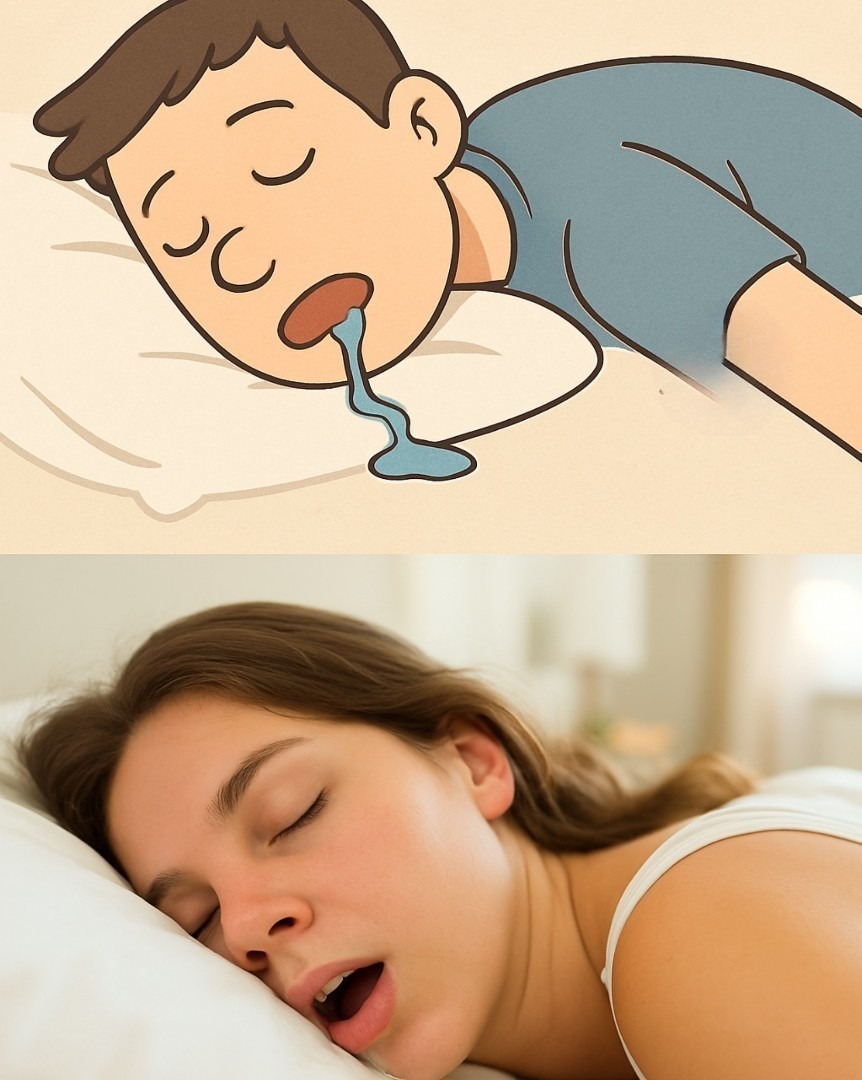
If you drool while you sleep, it’s easy to feel embarrassed or worried. Many people wake up to a damp pillow and immediately wonder if something is wrong with their health. The truth is, drooling during sleep is extremely common. In most cases, it is not a bad sign at all. In fact, it can actually tell you something interesting about how your brain and body are functioning at night.
First, it helps to understand what drooling really is. Drooling happens when saliva flows out of your mouth while you are asleep. During the day, your brain constantly signals you to swallow saliva without you even thinking about it. This automatic swallowing reflex keeps your mouth comfortable and prevents saliva from spilling out. At night, however, things change.
When you fall asleep, your brain shifts into different stages of sleep. These stages include light sleep, deep sleep, and REM (rapid eye movement) sleep. During deeper stages of sleep, your muscles become more relaxed. This includes the muscles around your mouth and jaw. If your mouth falls open while you are in a deep, relaxed state, saliva can escape more easily. So one simple explanation is that drooling can be a sign that your body is fully relaxed.
In fact, drooling often happens during deep sleep. Deep sleep is the stage when your brain and body do important repair work. Your tissues heal, your immune system strengthens, and your brain processes memories from the day. If you drool occasionally, it may simply mean that you are sleeping deeply and your body is fully at rest. In that sense, it can actually be a sign of healthy sleep.
Sleeping position also plays a big role. People who sleep on their side or stomach are more likely to drool. Gravity pulls saliva toward the pillow instead of down the throat. If you sleep on your back, saliva is more likely to stay inside your mouth because gravity pulls it toward your throat, where you swallow it unconsciously. So sometimes, drooling has less to do with your brain and more to do with how you position your body at night.
Another important factor is nasal congestion. If your nose is blocked due to allergies, a cold, or sinus issues, you may breathe through your mouth while sleeping. Mouth breathing increases the chance that your mouth stays open, which makes drooling more likely. In this case, drooling is not necessarily a brain issue but a sign that your airways may be partially blocked.
However, there are some situations where frequent or excessive drooling could signal something more serious. If drooling is accompanied by difficulty swallowing, speech problems, weakness on one side of the body, or sudden changes in coordination, it could be related to a neurological issue. Conditions that affect the brain’s control over muscles—such as certain nerve disorders or after a stroke—can interfere with normal swallowing reflexes.
That said, occasional nighttime drooling without other symptoms is almost always harmless. In children, drooling is very common because their swallowing muscles and nervous system are still developing. In adults, stress, fatigue, and even certain medications can temporarily increase saliva production or muscle relaxation.
Interestingly, saliva itself plays an important role in brain and body health. It helps protect your teeth, aids digestion, and keeps harmful bacteria under control. During sleep, saliva production usually decreases. But if your mouth stays open, even a small amount can escape. This is simply a physical effect of relaxation rather than a sign of brain damage or disease.
If drooling bothers you, there are simple steps you can take. Try adjusting your sleeping position by using a supportive pillow that encourages you to stay on your back. Treat nasal congestion if you have allergies or sinus problems. Practicing good sleep hygiene—such as keeping a consistent bedtime, limiting screen time before bed, and maintaining a comfortable sleep environment—can also improve overall sleep quality.
It’s also helpful to pay attention to patterns. Does drooling only happen when you are extremely tired? Does it occur during allergy season? Or does it happen every night with no clear cause? Tracking these details can help you understand whether it’s just normal relaxation or something that needs medical attention.
In summary, if you drool while you sleep, it usually means your body is relaxed and possibly in a deep stage of sleep. It is often a simple combination of muscle relaxation, sleeping position, and gravity. In most cases, it is not a sign that something is wrong with your brain. However, if drooling is severe, sudden, or accompanied by other unusual symptoms, it’s wise to consult a healthcare professional.
So instead of feeling embarrassed, you can think of occasional drooling as a small reminder that your body is switching into rest-and-repair mode. Sleep is one of the most powerful healing tools your brain has—and sometimes, a little drool is just part of the process.
