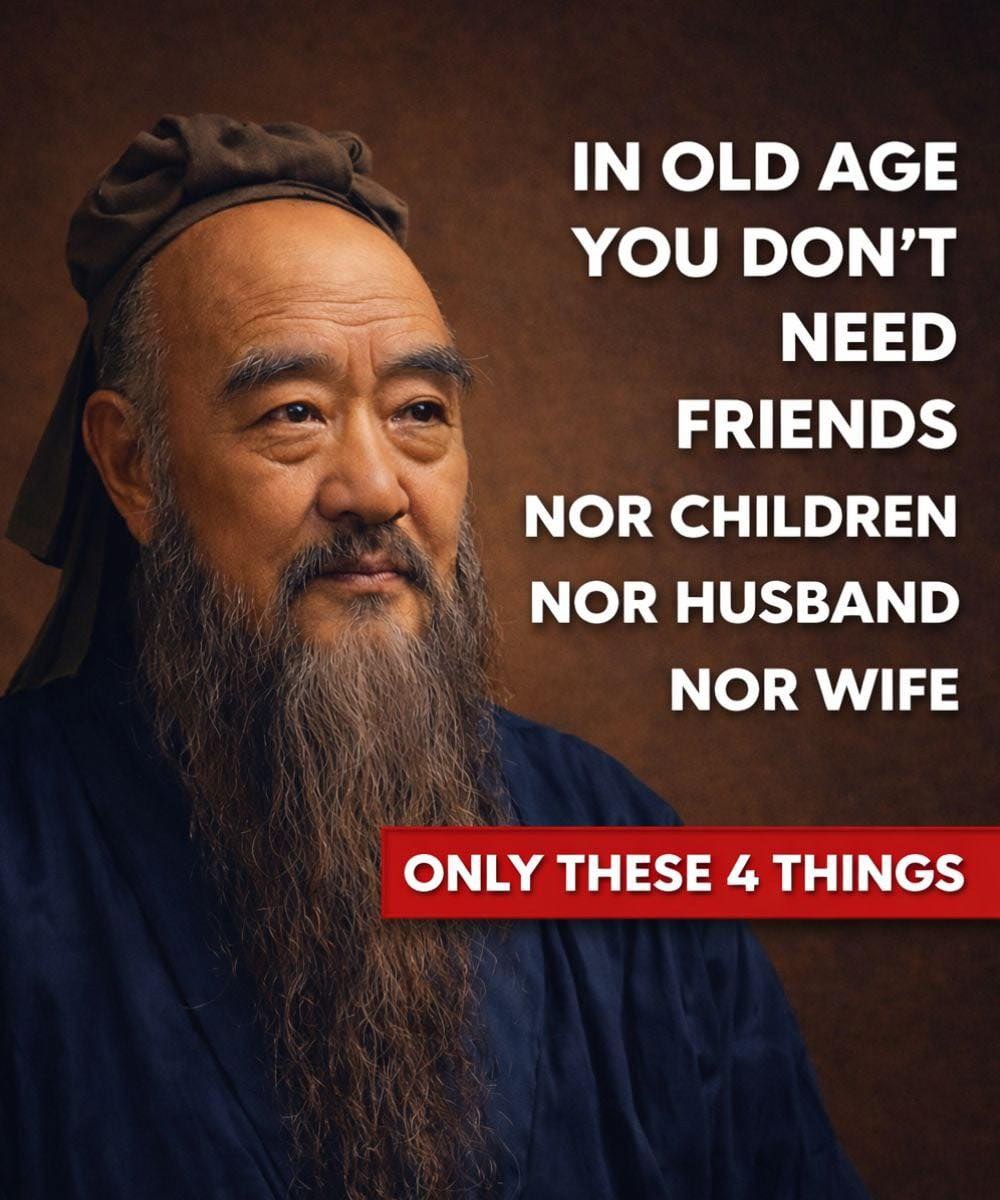
Aging is not simply a biological process; it is also a moral and spiritual journey. While modern society often focuses on youth, speed, and productivity, ancient wisdom reminds us that old age can be a time of depth, clarity, and fulfillment. The teachings attributed to Confucius continue to offer powerful guidance for living a balanced and meaningful life—especially in our later years.
Here are four moral principles rooted in Confucian thought that can help build a fuller and more balanced old age.
1. Cultivate Ren (Humaneness and Compassion)
At the heart of Confucian philosophy is Ren, often translated as humaneness, kindness, or benevolence. It reflects a deep sense of empathy and care for others. In old age, this principle becomes especially powerful.
As people grow older, they often reflect on relationships more than achievements. Compassion softens regrets, heals misunderstandings, and strengthens bonds with family, friends, and community. Rather than withdrawing from society, Confucius encouraged elders to remain morally engaged—offering wisdom, patience, and understanding.
Practicing Ren in later years might mean listening more than speaking, forgiving past grievances, mentoring younger generations, or participating in community service. Compassion not only benefits others; it also enriches the elder’s emotional well-being. Studies in modern psychology confirm what Confucius taught centuries ago: kindness enhances happiness and reduces loneliness.
Old age grounded in compassion becomes less about loss and more about contribution.
2. Embrace Li (Proper Conduct and Ritual)
Another central Confucian principle is Li, which refers to proper conduct, rituals, and respect for social harmony. While rituals may sound formal, they include everyday acts of courtesy, gratitude, and responsibility.
For older adults, maintaining structure and respectful behavior provides stability and dignity. Simple routines—morning prayers, family meals, greeting neighbors, celebrating traditions—create a sense of order and belonging. These rituals connect elders to their cultural roots and strengthen intergenerational ties.
Confucius believed that harmony in society begins with harmony in personal behavior. Even small acts—speaking gently, dressing neatly, expressing appreciation—affirm self-respect. In old age, when physical strength may decline, dignity through conduct becomes even more important.
Li also reminds elders that they still hold a valued role. In many Asian traditions influenced by Confucian thought, older people are respected as moral anchors of the family. By modeling integrity and courtesy, they preserve harmony and transmit values to children and grandchildren.
A balanced old age is not chaotic or isolated; it is structured, respectful, and connected.
3. Commit to Lifelong Learning
Confucius famously valued education and self-improvement throughout life. He is remembered for saying that learning should never stop, regardless of age. Intellectual growth keeps the mind alive and the spirit curious.
In later years, learning may not involve formal schooling, but it can take many forms: reading, studying scripture, exploring history, learning a language, mastering a craft, or even adapting to new technologies. Mental engagement protects against cognitive decline and strengthens self-confidence.
Beyond intellectual benefits, lifelong learning nurtures humility. Confucius taught that wisdom begins with recognizing how much we still have to understand. For elders, this mindset prevents rigidity and bitterness. Instead of saying, “I know everything already,” they remain open, adaptable, and interested in the world.
This principle also helps older adults bridge generational gaps. Learning about modern ideas, digital tools, or new cultural trends allows elders to connect meaningfully with younger family members. When curiosity replaces criticism, relationships flourish.
A full old age is not stagnant. It grows deeper, richer, and wiser through continued learning.
4. Practice Filial Reciprocity and Gratitude
Confucian ethics strongly emphasize Xiao, often translated as filial piety—respect and care for parents and elders. But this value is not one-sided. It also encourages elders to act in ways worthy of respect.
In old age, this principle evolves into reciprocal gratitude. Elders who once cared for children now accept care with humility rather than pride. At the same time, they offer emotional support, blessings, and guidance in return.
Gratitude transforms aging. Instead of focusing on what has been lost—health, career, independence—older adults can reflect on what has been gained: experience, family, memories, resilience. Expressing appreciation for small daily joys—sunlight, conversation, shared meals—cultivates peace.
Confucius believed that moral character is demonstrated in relationships. By maintaining gratitude and mutual respect within the family, elders strengthen unity. They avoid becoming isolated or resentful. Instead, they embody wisdom and calm.
Reciprocity also means accepting change with grace. As roles shift within the family, humility allows older adults to remain emotionally balanced. Gratitude reduces fear of dependency and fosters harmony.
Building a Balanced Old Age
The teachings attributed to Confucius are not abstract theories; they are practical moral tools. Compassion nurtures connection. Proper conduct sustains dignity. Lifelong learning keeps the mind vibrant. Gratitude preserves harmony within families.
In a fast-paced world that often sidelines the elderly, these principles remind us that old age can be a season of moral refinement. It is a time to harvest the lessons of a lifetime and share them generously.
A fuller and more balanced old age is not measured by wealth or status but by inner character. As Confucian wisdom suggests, the ultimate goal is not merely to live long, but to live rightly.
When elders embody compassion, dignity, curiosity, and gratitude, they become living examples of harmony. Their presence enriches families and communities. In this way, aging becomes not a decline, but a quiet ascent toward wisdom and peace.
