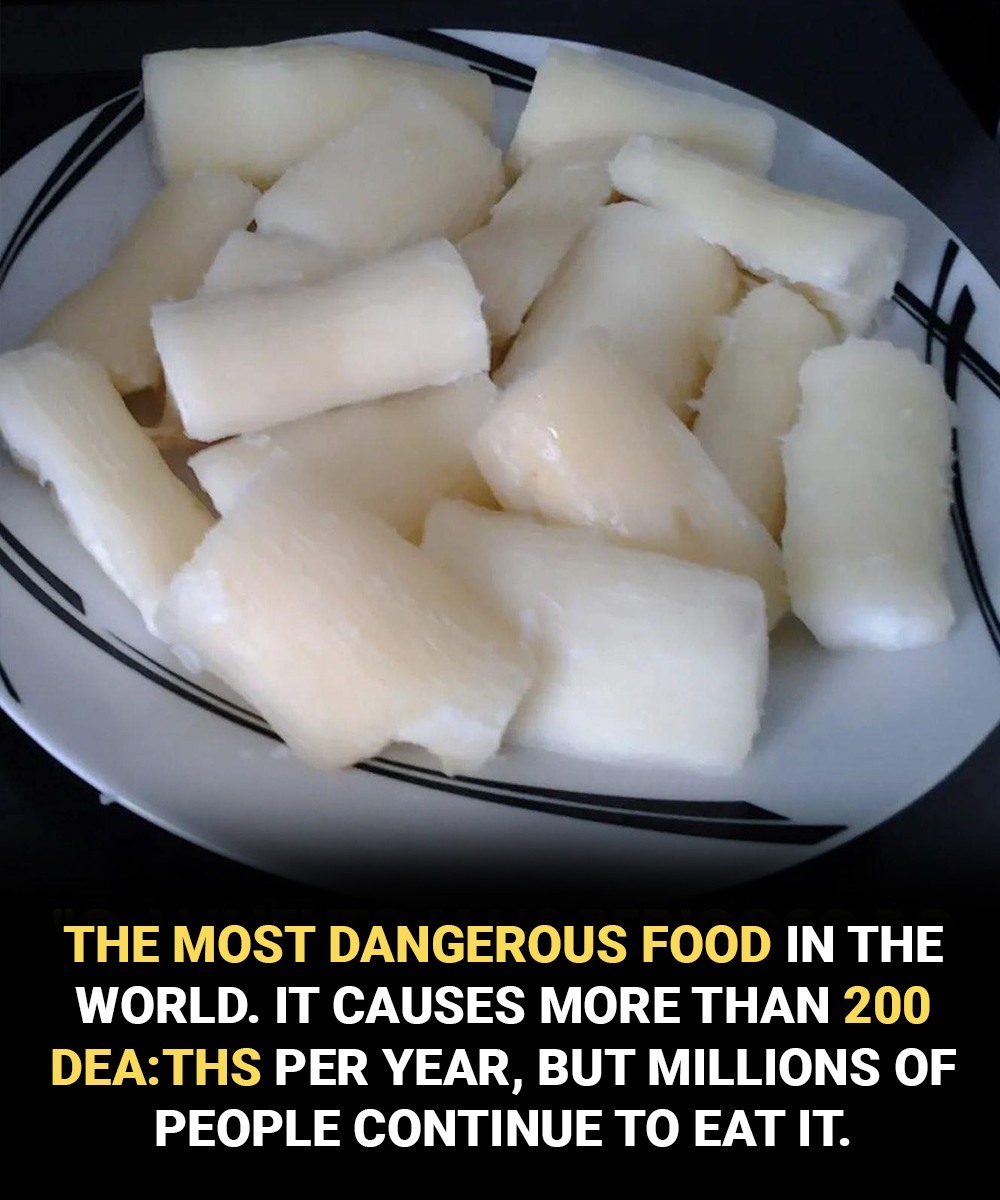
THE MOST DANGEROUS FOOD IN THE WORLD
When people hear the phrase “the most dangerous food in the world,” they often imagine spoiled leftovers or fast food packed with sugar and fat. Surprisingly, the title belongs to something far more unexpected—a traditional food enjoyed by millions across the globe. This food is cassava, a starchy root that looks harmless, tastes mild, and serves as a daily staple for more than 800 million people. Yet when prepared incorrectly, cassava can be deadly, earning it a reputation as the most dangerous food in the world.
What Is Cassava?
Cassava (also known as yuca or manioc) is a tuberous root native to South America and widely consumed in Africa, Asia, and parts of Latin America. It is valued for its ability to grow in poor soil and harsh climates, making it a lifeline during droughts and food shortages. Cassava is used to make flour, bread, tapioca, porridge, and countless traditional dishes.
But beneath its rough brown skin lies a hidden threat.
The Silent Poison Inside Cassava
Cassava contains cyanogenic glycosides, natural compounds that can release hydrogen cyanide when the plant is damaged, chewed, or improperly processed. Hydrogen cyanide is a powerful poison—it prevents the body’s cells from using oxygen, effectively causing internal suffocation.
There are two main types of cassava:
- Sweet cassava – contains lower levels of cyanide
- Bitter cassava – contains dangerously high levels of cyanide
Bitter cassava is especially risky and must be carefully processed before consumption. Even sweet cassava can become toxic if eaten raw or undercooked.
What Happens If Cassava Is Prepared Incorrectly?
Improperly processed cassava can cause acute cyanide poisoning, with symptoms appearing within hours. These include:
- Dizziness and headache
- Vomiting and stomach pain
- Rapid breathing
- Low blood pressure
- Confusion and loss of consciousness
In severe cases, cyanide poisoning can lead to respiratory failure and death.
Long-term exposure to low levels of cyanide from poorly prepared cassava is equally dangerous. It has been linked to chronic illnesses such as:
- Konzo – a sudden, irreversible paralysis of the legs
- Nerve damage
- Goiter and thyroid problems
- Stunted growth in children
Entire communities have been affected during times of famine, when people are forced to skip proper preparation methods due to hunger.
Why Is Cassava Still So Widely Eaten?
If cassava is so dangerous, why is it consumed by millions every day?
The answer lies in knowledge and tradition. For centuries, cultures that rely on cassava have developed methods to make it safe, including:
- Peeling the root thoroughly
- Soaking it in water for 24–72 hours
- Fermenting
- Sun-drying
- Cooking for extended periods
When these steps are followed correctly, cassava becomes safe and nutritious, providing carbohydrates, fiber, and essential minerals.
Problems arise when people are unaware of these steps, rush the process, or face food shortages that force them to cut corners.
Other Contenders for “Most Dangerous Food”
While cassava often tops the list, it is not alone. Several other foods can be lethal if mishandled:
1. Fugu (Pufferfish)
A delicacy in Japan, fugu contains tetrodotoxin—200 times more deadly than cyanide. Only licensed chefs are allowed to prepare it, yet deaths still occur.
2. Ackee Fruit
Jamaica’s national fruit is toxic when unripe. It contains hypoglycin, which can cause severe vomiting, seizures, and even death.
3. Raw Cashews
Raw cashews contain urushiol, the same toxin found in poison ivy. They must be roasted to be safe.
4. Nutmeg (in large amounts)
While harmless in small doses, consuming large quantities can cause hallucinations, heart problems, and organ failure.
Despite these risks, none match cassava’s global impact and potential for widespread harm.
Why Cassava Is Considered the Most Dangerous
Cassava earns its reputation not because it is eaten occasionally or as a luxury, but because:
- It is a daily staple for hundreds of millions
- It contains a lethal toxin naturally
- Improper preparation is common during poverty or famine
- It has caused documented mass poisonings and paralysis outbreaks
The danger is not hypothetical—it is real, ongoing, and well-documented.
Can Cassava Be Safe?
Yes—when handled correctly, cassava is perfectly safe and even beneficial. The danger lies not in the food itself, but in lack of awareness and improper processing.
To safely consume cassava:
- Never eat it raw
- Always peel it completely
- Soak, ferment, or dry it before cooking
- Cook it thoroughly
Education and food safety programs have already reduced cassava-related illnesses in many regions, proving that knowledge can turn a dangerous food into a lifesaving one.
Final Thoughts
The most dangerous food in the world is not fast food, sugar, or artificial additives—it is a humble root that feeds millions. Cassava is a powerful reminder that natural does not always mean safe, and that tradition, knowledge, and proper preparation can mean the difference between nourishment and poison.
In the right hands, cassava sustains life. In the wrong circumstances, it can take it away. Understanding this balance is essential—not just for those who eat cassava daily, but for anyone interested in the hidden risks and remarkable resilience of the global food supply.
