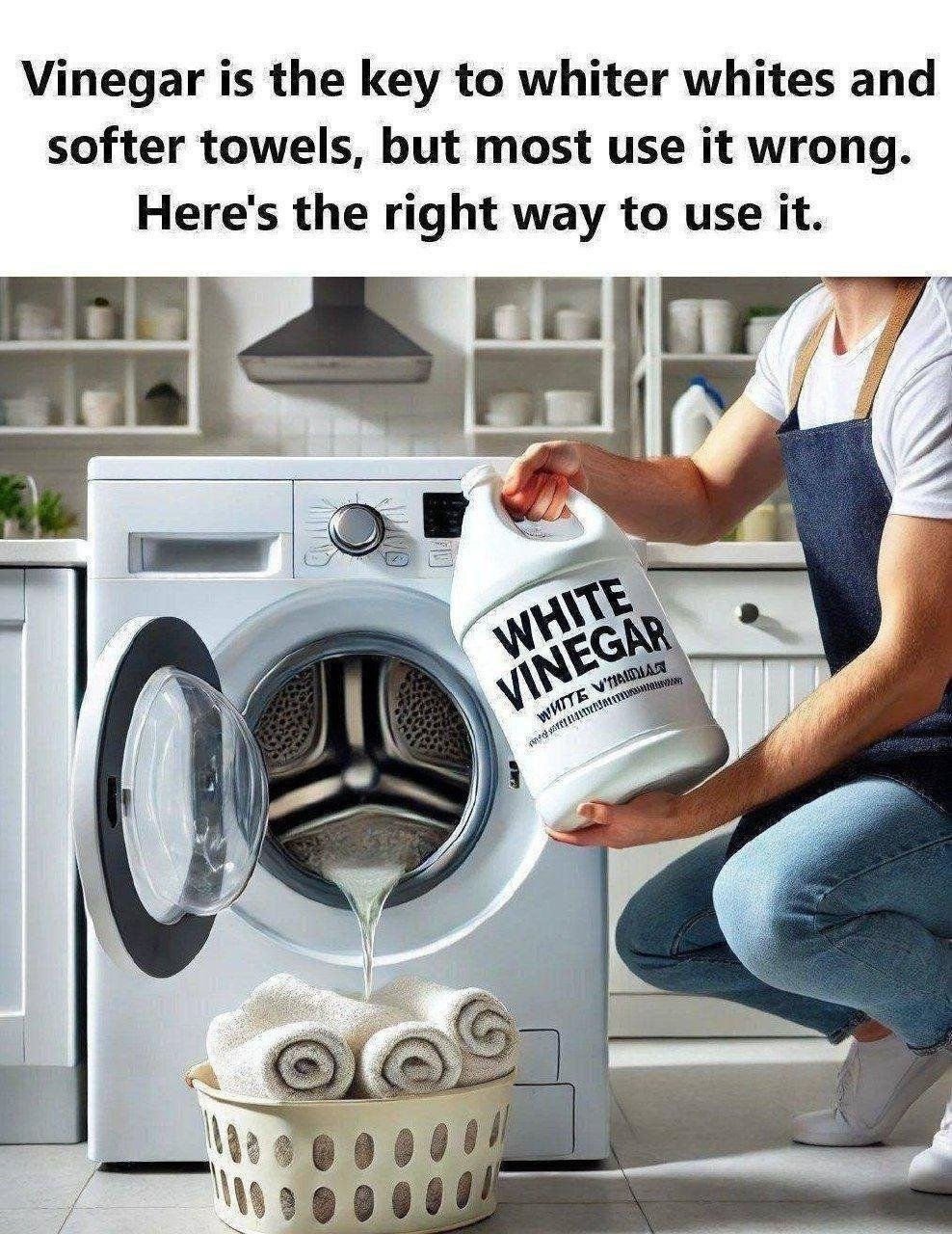
Vinegar Is the Key to Whiter Whites and Softer Towels — But Most People Use It Wrong. Here’s the Right Way to Use It
If your white clothes look dull, gray, or yellowed and your towels feel stiff instead of fluffy, you’re not alone. Many people wash their laundry correctly—or so they think—yet still struggle with rough fabrics, lingering odors, and faded whites. The surprising solution is something you probably already have in your kitchen: vinegar.
However, while vinegar truly can transform your laundry, most people use it incorrectly, which limits its benefits or even causes damage over time. Used the right way, vinegar can brighten whites, soften towels, remove odors, and extend the life of your clothes—without harsh chemicals.
Let’s break down why vinegar works, where people go wrong, and exactly how to use it for the best results.
Why Vinegar Works in Laundry
White vinegar is mildly acidic, which makes it incredibly effective at breaking down residue left behind by detergents, fabric softeners, minerals from hard water, and body oils. These residues are the main reason whites lose their brightness and towels become stiff and scratchy.
Unlike bleach, vinegar doesn’t weaken fabric fibers when used correctly. Instead, it cleans them at a deeper level, restoring softness and freshness while helping fabrics rinse completely clean.
Common Mistakes People Make With Vinegar
Before learning the right way, it’s important to understand what not to do.
1. Pouring vinegar directly onto clothes
This can cause uneven exposure, potential discoloration, and lingering smells.
2. Mixing vinegar with bleach
This is dangerous. Vinegar and bleach create toxic chlorine gas. They should never be used together—even in separate cycles close together.
3. Using too much vinegar
More is not better. Excess vinegar can weaken elastic fibers and seals inside your washing machine over time.
4. Using vinegar in the detergent compartment
Vinegar neutralizes detergent, making it less effective if added too early in the wash cycle.
The Right Way to Use Vinegar for Whiter Whites
For brightening white clothes, vinegar works best as a rinse aid, not a detergent replacement.
Step-by-step method:
- Wash whites with your regular detergent using warm or hot water (check fabric labels).
- Add ½ cup of white distilled vinegar to the fabric softener compartment or during the final rinse cycle.
- Let the cycle finish normally.
- Dry clothes in sunlight if possible, which naturally boosts whitening.
Vinegar removes leftover detergent and mineral buildup that cause dullness, allowing whites to regain their natural brightness—without bleach.
The Right Way to Use Vinegar for Softer Towels
If your towels feel rough, absorb water poorly, or smell musty even after washing, detergent and softener buildup is likely the culprit.
Correct towel-softening method:
- Wash towels with detergent as usual.
- Add ½ to 1 cup of white vinegar to the fabric softener compartment.
- Skip commercial fabric softener completely.
- Dry thoroughly—preferably on medium heat.
Vinegar strips away residue that coats towel fibers, allowing them to fluff up and absorb water again. Unlike fabric softener, it doesn’t leave behind a waxy film.
For Extremely Stiff or Smelly Towels
Once a month, give your towels a deep reset:
- Wash towels in hot water with 1 cup of vinegar and no detergent.
- Run a second wash with ½ cup baking soda (no vinegar this time).
- Dry completely.
This two-step method removes years of buildup and neutralizes odors trapped deep in the fibers.
Will Clothes Smell Like Vinegar?
No—if used correctly. The vinegar smell disappears completely during the rinse and drying process. If a smell remains, it usually means too much vinegar was used or the load was overcrowded and didn’t rinse properly.
Is Vinegar Safe for Washing Machines?
Yes, in moderation. Using vinegar once or twice a week is safe for most modern machines. Avoid daily use and never pour it directly onto rubber seals or use it undiluted.
If your machine has rubber hoses or seals, occasional use is fine, but excessive amounts over time may cause wear.
Bonus Benefits of Using Vinegar in Laundry
- Removes sweat and mildew odors
- Reduces static cling
- Keeps colors from fading
- Prevents lint buildup
- Helps clothes rinse cleaner, reducing skin irritation
Final Thoughts
Vinegar truly is one of the most powerful, natural laundry boosters available—but only when used the right way. Stop pouring it directly onto clothes, stop mixing it with bleach, and stop using excessive amounts. When added during the rinse cycle, vinegar gently restores brightness, softness, and freshness without damaging fabrics or your washing machine.
Once you start using vinegar correctly, you’ll notice your whites looking cleaner, your towels feeling luxurious again, and your laundry smelling genuinely fresh—without relying on harsh chemicals.
