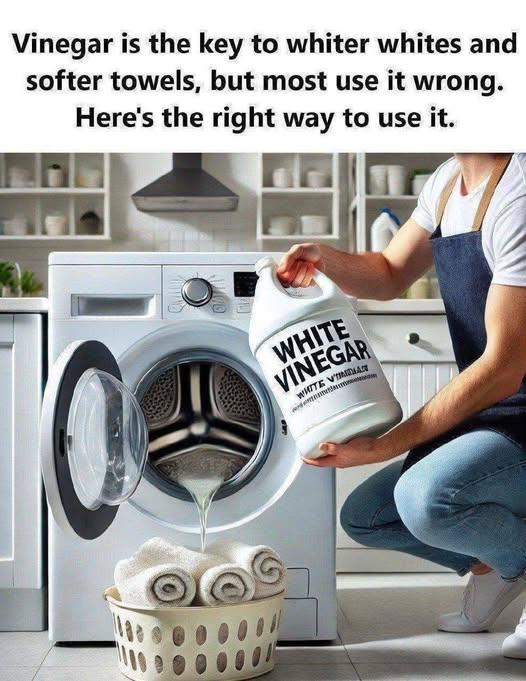
Vinegar Is the Key to Whiter Whites and Softer Towels — But Most People Use It Wrong. Here’s the Right Way to Use It
When it comes to laundry care, vinegar is one of the most underrated household heroes. It’s inexpensive, natural, and already sitting in most kitchens. Yet despite its popularity in “laundry hacks,” many people use vinegar incorrectly — which means they miss out on its real power. Used the right way, vinegar can restore dingy whites, soften towels naturally, remove odors, and even protect your washing machine. Used the wrong way, it does almost nothing or, worse, damages fabrics over time.
Let’s clear up the confusion and show you exactly how to use vinegar properly for brighter whites and luxuriously soft towels.
Why Vinegar Works in Laundry
White distilled vinegar is mildly acidic, and that acidity is what makes it effective. Over time, laundry detergent, fabric softener, hard water minerals, and body oils build up in fabrics. These residues trap dirt, dull whites, and make towels stiff and scratchy.
Vinegar works by:
- Breaking down detergent and mineral buildup
- Neutralizing odors instead of masking them
- Restoring fabric absorbency
- Softening fibers naturally without coating them
Unlike commercial fabric softeners, vinegar doesn’t leave behind a waxy residue. Instead, it cleans at a deeper level.
The Biggest Mistake People Make
The most common mistake is adding vinegar together with detergent in the main wash cycle.
Why this is wrong:
- Vinegar neutralizes detergent before it can clean properly
- Clothes may come out looking the same — or worse
- You waste both products
Another mistake is using too much vinegar, assuming more is better. Excess vinegar won’t make clothes cleaner and can weaken elastic and delicate fibers over time.
The key is when and where you add it.
The Right Way to Use Vinegar for Whiter Whites
If your white clothes look gray, yellowed, or dull, vinegar can help — but only if used correctly.
Correct Method:
- Wash whites with your regular detergent as usual.
- During the rinse cycle, add ½ to 1 cup of white distilled vinegar.
- Use the fabric softener compartment, not the detergent drawer.
- Let the cycle finish normally.
This allows the detergent to clean first, then lets vinegar remove leftover residue that causes dullness.
For Extra-Dingy Whites:
- Soak whites in warm water with 1 cup vinegar for 30–60 minutes before washing.
- Wash normally afterward.
This is especially effective for socks, undershirts, and pillowcases.
The Right Way to Use Vinegar for Softer Towels
If your towels feel stiff, scratchy, or less absorbent, fabric softener is often the problem. It coats fibers with silicone, reducing absorbency over time.
Correct Method:
- Wash towels with detergent only — no fabric softener.
- Add ½ cup vinegar to the rinse cycle.
- Dry thoroughly (air-dry or tumble dry).
Vinegar strips away buildup and restores the towel’s natural fluffiness and absorbency.
Important Tip:
Do not use vinegar and fabric softener together. Choose one — and vinegar is the better option.
How Often Should You Use Vinegar?
- Whites: Every 2–3 washes
- Towels: Every wash or every other wash
- General laundry: Once a week is enough
Daily use on all clothing isn’t necessary and may shorten fabric lifespan.
Will Clothes Smell Like Vinegar?
No — when used correctly, vinegar smell disappears completely once clothes are dry. If you smell vinegar afterward, you likely used too much or added it at the wrong stage.
For added freshness, you can:
- Line-dry in sunlight
- Add a few drops of essential oil to dryer balls (never directly into the washer)
Bonus Benefits Most People Don’t Know
Using vinegar in laundry also:
- Reduces static cling
- Helps remove pet hair
- Prevents color fading
- Eliminates mildew smells from towels
- Keeps washing machines cleaner
Once a month, run an empty hot cycle with 2 cups vinegar to remove soap scum and odors from the machine itself.
What Not to Do with Vinegar
Avoid using vinegar on:
- Silk, wool, or delicate fibers
- Clothes with rubber prints or heavy elastic
- Natural stone surfaces in laundry rooms
Also, never mix vinegar with bleach — this creates toxic chlorine gas and is extremely dangerous.
Final Thoughts
Vinegar truly is the secret to whiter whites and softer towels — but only when used the right way. The timing matters more than the amount. By adding vinegar during the rinse cycle instead of the wash, you let it do what it does best: remove buildup, refresh fibers, and restore softness naturally.
Once you switch to this method, you’ll notice brighter whites, fluffier towels, and fewer lingering odors — all without expensive products or harsh chemicals. Sometimes the simplest solutions really are the most effective.
