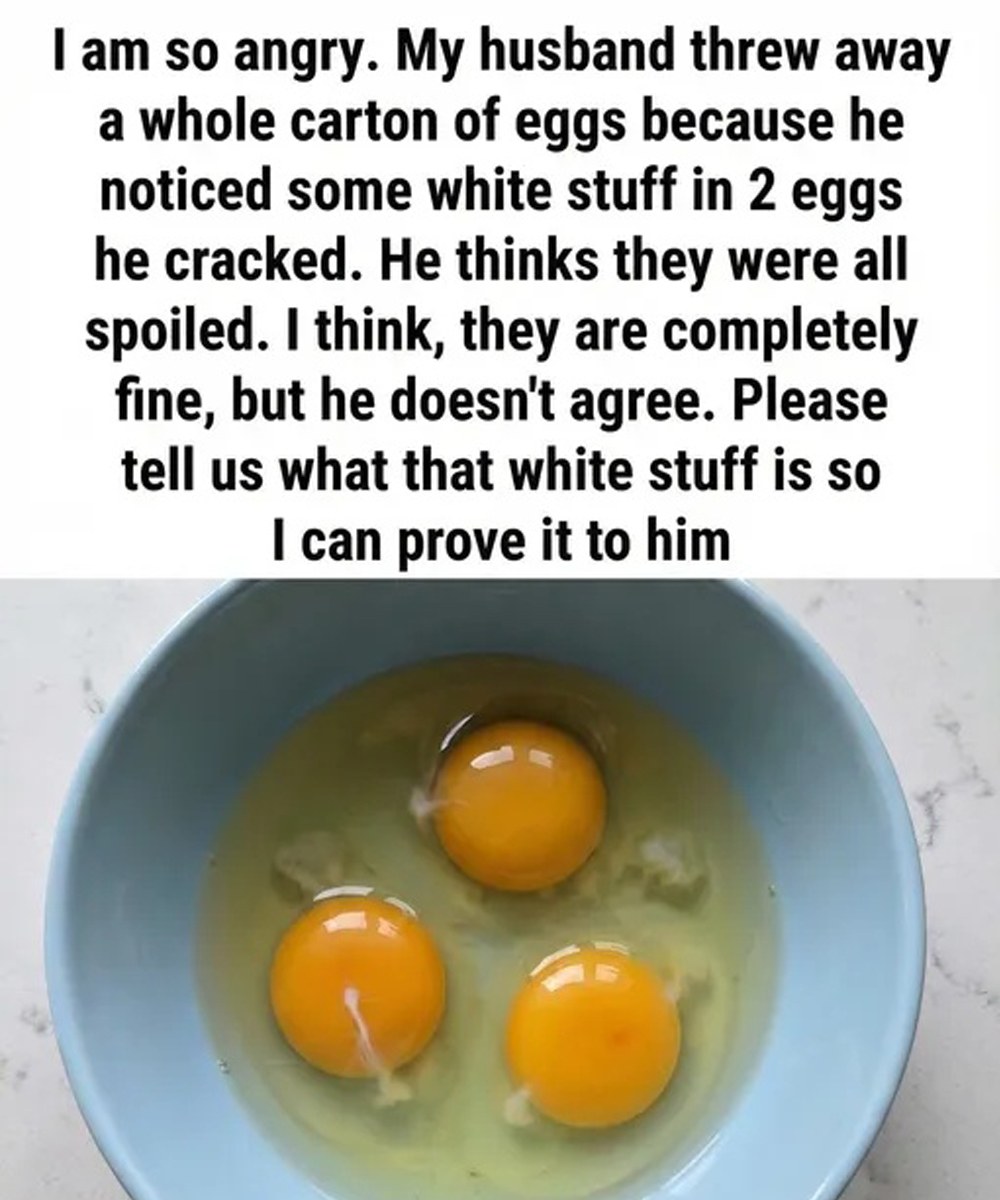
When you crack open an egg, you might occasionally notice a thin, white, stringy strand clinging to the yolk. At first glance, it can look odd—or even a little off-putting. Some people assume it’s a sign the egg has gone bad or that something is wrong with it. In reality, this mysterious strand is completely natural, harmless, and actually a sign of a fresh, high-quality egg.
What Is the White Stringy Strand in an Egg?
That thin, rope-like strand is called the chalaza (pronounced kuh-LAY-zuh). The chalaza is a natural part of the egg’s anatomy and plays an important role long before the egg ever reaches your kitchen.
Inside an egg, the yolk needs to stay centered and protected. The chalaza acts like a pair of tiny “anchor cords,” connecting the yolk to the inner membrane of the shell. These cords help keep the yolk suspended in the middle of the egg, preventing it from pressing against the shell and becoming damaged.
Interestingly, there are usually two chalazae in every egg—one on each side of the yolk—though you may only notice one when cracking it open.
Is the Chalaza Safe to Eat?
Yes—absolutely. The chalaza is completely edible and safe to consume. It’s made of the same proteins found in egg whites (albumen), so there’s no health risk involved.
Many people remove it simply because of its appearance or texture, not because it’s harmful. If it bothers you, you can easily scoop it out with a spoon, but from a nutritional and safety standpoint, there’s no need to remove it at all.
Does the Chalaza Mean the Egg Is Fresh?
Here’s the good news: a visible chalaza is actually a sign of freshness.
In very fresh eggs, the chalaza is firm, thick, and easy to see. As an egg ages, the egg white becomes thinner and the chalaza gradually weakens and may disappear altogether. So if you crack an egg and clearly see that white, stringy strand, it often means the egg hasn’t been sitting around for long.
This is why farm-fresh or recently laid eggs tend to have more noticeable chalazae compared to older supermarket eggs.
Why Don’t We Always See It?
You might be wondering why you don’t notice this strand every time you crack an egg. There are a few reasons:
-
Egg age: Older eggs have less visible chalazae.
-
Egg handling: Movement and transport can weaken or break down the chalaza over time.
-
Lighting and angle: Sometimes it’s there, but it blends into the egg white and goes unnoticed.
-
Cooking method: If you crack an egg directly into a hot pan, you may never spot it.
So even if you don’t always see it, the chalaza is almost always present—just not always obvious.
Is the Chalaza a Sign of Fertilization?
No, the chalaza has nothing to do with fertilization. This is a very common myth.
Fertilized eggs and unfertilized eggs both contain chalazae. The presence of this white strand does not mean the egg was fertilized or that it could develop into a chick. Eggs sold in grocery stores are almost always unfertilized, and the chalaza is simply part of the egg’s natural structure.
Does Cooking Affect the Chalaza?
When you cook an egg, the chalaza usually becomes unnoticeable. Heat causes egg proteins to denature and firm up, blending the chalaza into the rest of the egg white. Whether you scramble, fry, boil, or bake eggs, you’re unlikely to see or feel it once the egg is cooked.
In baking, the chalaza dissolves completely into the batter and has no effect on texture, taste, or appearance.
Nutritional Value of the Chalaza
Nutritionally, the chalaza is similar to egg white. It contains protein and water, with negligible fat and calories. While it doesn’t provide unique nutrients on its own, it contributes to the overall protein content of the egg.
In short, eating the chalaza won’t add or subtract anything meaningful from your meal—it simply blends in as part of the egg.
Should You Be Concerned?
There’s no reason for concern at all. The chalaza is:
-
A natural part of the egg
-
A sign of freshness
-
Safe and edible
-
Not related to spoilage or fertilization
If an egg smells bad, has an unusual color (such as pink, green, or black), or feels slimy inside the shell, those are reasons to discard it. A white, stringy strand attached to the yolk is not one of them.
The Bottom Line
That thin, white, stringy strand you sometimes notice when cracking an egg is called the chalaza—and far from being a flaw, it’s actually a good thing. It helps protect the yolk, keeps it centered, and signals that your egg is likely fresh.
So the next time you see it, you can crack on with confidence. Your egg is perfectly normal, perfectly safe, and ready to be enjoyed.
