 Skip to content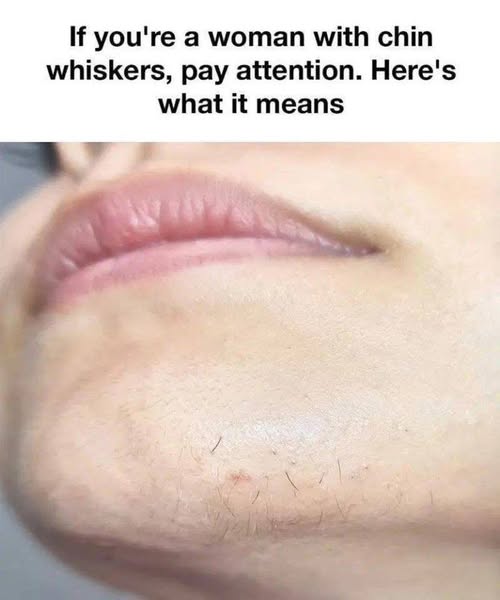
Chin whiskers in women are often surrounded by myths and misleading claims, like the one suggested in the image. In reality, the appearance of a few coarse or dark hairs on the chin is usually a normal and harmless occurrence. Understanding why these hairs appear can help reduce unnecessary worry and guide you toward appropriate care if needed.
One of the most common reasons women develop chin hairs is hormonal fluctuation. The body naturally produces small amounts of androgens—often referred to as “male hormones”—in both men and women. When the balance between estrogen and androgens shifts, even slightly, it can stimulate hair follicles on the face, particularly on the chin and upper lip. These fluctuations can happen during puberty, pregnancy, or menopause, and they don’t necessarily indicate a health problem.
Genetics also plays a major role. If women in your family tend to have visible facial hair, there’s a higher chance you might experience the same. Ethnicity can influence this as well, with some populations naturally having darker or coarser hair. In such cases, chin whiskers are simply a variation of normal human biology rather than a medical concern.
Another factor is aging. As women grow older, especially after menopause, estrogen levels decline while androgen levels may remain relatively stable. This shift can lead to the development of thicker, more noticeable facial hairs. Many women notice chin whiskers appearing or becoming more prominent in their 40s or 50s, and this is generally considered a normal part of aging.
However, there are instances where facial hair growth may signal an underlying condition. One such condition is hirsutism, which refers to excessive hair growth in areas where men typically grow hair, such as the chin, chest, or back. Hirsutism itself is not a disease but a symptom that can be linked to hormonal imbalances.
A common cause of hirsutism is polycystic ovary syndrome (PCOS). This condition affects hormone levels and can lead to symptoms like irregular menstrual cycles, acne, weight gain, and increased facial or body hair. PCOS is relatively common and manageable, but it does require proper diagnosis and medical guidance.
Other less common causes of increased facial hair include adrenal gland disorders or certain medications that influence hormone levels. If chin hair appears suddenly, becomes significantly thicker, or is accompanied by other unusual symptoms, it’s a good idea to consult a healthcare provider for evaluation.
For most women, though, a few stray chin hairs are completely normal and not a cause for concern. Managing them is often a matter of personal preference. There are several safe and effective methods for removal, including tweezing, waxing, threading, and shaving. Contrary to popular belief, shaving does not make hair grow back thicker or darker—it simply cuts the hair at the surface, which can make it feel coarser as it grows out.
For those seeking longer-term solutions, options like laser hair removal or electrolysis may be considered. These methods target the hair follicle to reduce or eliminate growth over time, though they typically require multiple sessions and can vary in effectiveness depending on hair and skin type.
It’s also important to approach this topic with a balanced perspective. Societal beauty standards often place unrealistic expectations on women, leading to unnecessary concern over natural variations like facial hair. Recognizing that chin whiskers are a common experience can help reduce stigma and promote body acceptance.
In conclusion, chin whiskers in women are usually a normal result of hormonal changes, genetics, and aging. While they can occasionally signal an underlying condition like polycystic ovary syndrome, most cases are harmless. Paying attention to sudden or excessive changes is important, but for the majority of women, a few chin hairs are simply a natural part of life.